
After an accident, it is normal to have practical questions before you have legal ones: Who pays the medical bills? What happens if you miss work? Should you talk to the insurance company? And at what point do you need a lawyer? And what is a personal injury lawyer?
A personal injury lawyer represents people who were hurt when another person, business, or organization may have acted carelessly or failed to take reasonable care. Their job is to help injured people understand their rights, build a claim, deal with insurance companies, and pursue compensation for losses such as medical expenses, lost wages, pain and suffering, and future care needs.
Understanding the role of a personal injury lawyer can help you make informed decisions after an accident. Whether you’ve been hurt in a car crash, slip and fall accident, or another incident caused by negligence, a personal injury attorney can guide you through the legal process and help protect your rights.
The Basics: What Is a Personal Injury Lawyer?
A personal injury lawyer is an attorney who helps injured people seek compensation when another person, business, or organization may be legally responsible.
The Personal Injury Lawyer’s Role
That may sound simple, but the role is broader than many people realize. A personal injury lawyer may investigate what happened, identify who may be responsible, calculate damages, negotiate with insurance companies, and, when necessary, file a lawsuit.
A personal injury lawyer can help you recover compensation after a wide range of injuries:
- Car accidents
- Slip and fall accidents
- Motorcycle accidents
- Truck accidents
- Medical malpractice
- Wrongful death claims
In each of these cases, the central question is whether someone else’s conduct caused harm.
This matters because if another person caused the injury, you may have the right to pursue compensation.
The Difference Between a Lawyer and Attorney
In everyday matters, most people use “lawyer” and “attorney” interchangeably. Both terms commonly refer to legal professionals who represent clients in injury-related matters.
For most accident victims, the more important question is not the job title. It is whether the legal professional has experience handling injury claims, insurance negotiations, deadlines, and litigation.
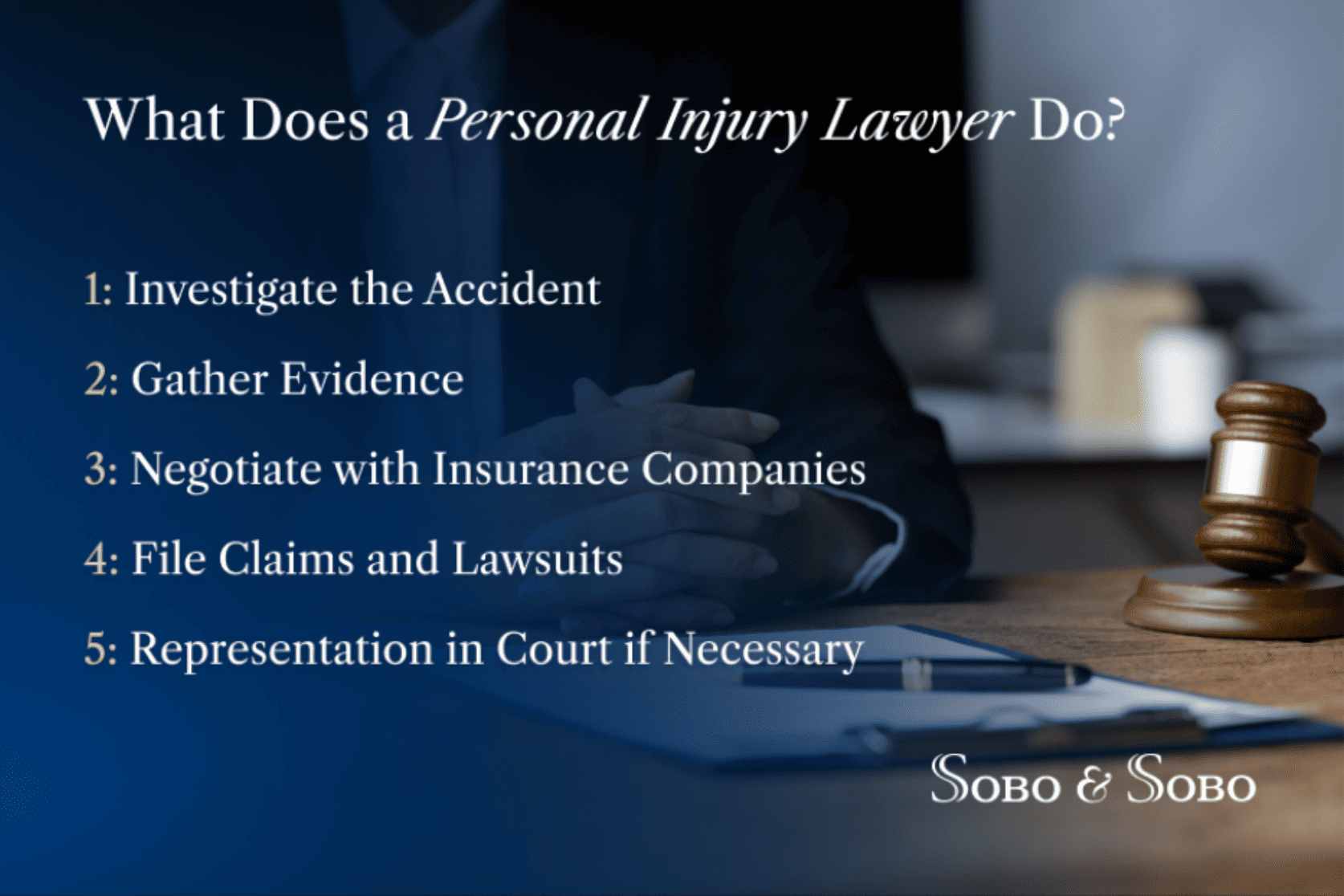
Caption: Personal injury lawyers manage every stage of a claim, from evidence collection to courtroom representation
What Does a Personal Injury Lawyer Do?
A personal injury lawyer manages the legal side of your injury claim so you can focus on recovery. That work often includes gathering evidence, communicating with insurance companies, calculating damages, negotiating settlement offers, and preparing a case for court if a fair resolution is not possible.
Investigating Accidents and Gathering Evidence
A personal injury lawyer may:
- Review accident reports
- Collect medical records
- Interview witnesses
- Examine photographs and videos
- Consult with experts
This early investigation matters because evidence can disappear quickly. Surveillance footage may be overwritten. Vehicles may be repaired. Witness memories may fade. The sooner evidence is preserved, the stronger the claim may be.
Negotiating With Insurance Companies
Insurance companies are businesses. Their adjusters may sound sympathetic and helpful, but their job is to protect the company’s financial interests.
Your attorney can handle communications with adjusters, review settlement offers, respond to insurance tactics, and negotiate for compensation that reflects your actual losses.
Filing Injury Claims and Lawsuits
When a claim can’t be resolved directly with the insurance company, a lawyer can file a lawsuit and manage the legal process on your behalf.
That may include preparing court documents, meeting filing deadlines, responding to motions, exchanging evidence, and keeping the case moving through the appropriate legal channels.
This is important because the legal system depends on the timely filing of accurate paperwork. In some cases, missing a paperwork deadline can limit or even prevent recovery.
Representing You in Court if Necessary
Although many cases settle before trial, a personal injury lawyer can represent clients in court when litigation becomes necessary.
Trial preparation can affect how insurance companies evaluate a claim. When a lawyer is ready to present evidence before a judge or jury, the insurance company may have more reason to take the case seriously.
Unsure whether you have a case? Contact Sobo & Sobo for a free consultation.
What Cases Do Personal Injury Lawyers Handle?
Top personal injury lawyers handle a wide range of accident and injury claims. The common thread is negligence: someone failed to act with reasonable care, and another person was injured as a result.
Car Accident Cases
Personal injury lawyers commonly handle these type of car accident cases:
- Rear-end collisions
- Distracted driving accidents
- Drunk driving crashes
- Hit-and-run accidents
A lawyer can help determine who was at fault, identify available insurance coverage, collect evidence, and pursue compensation for medical treatment, lost income, and other damages.
Slip and Fall Accidents
Property owners may be liable when unsafe conditions cause injuries on their premises. These slip and fall cases often depend on whether the property owner knew, or should have known, about the dangerous condition.
Examples include:
- Wet floors
- Uneven walkways
- Poor lighting
- Unsafe stairways
Motorcycle and Truck Accidents
Truck accident cases may involve multiple parties, such as a driver, trucking company, maintenance contractor, or cargo-loading company. Motorcycle accident claims may require extra care because insurance companies sometimes rely on unfair assumptions about riders.
Medical Malpractice and Workplace Injuries
Some personal injury lawyers handle medical malpractice claims involving surgical errors, misdiagnosis, medication mistakes, birth injuries, or failure to provide appropriate care. They may also handle certain workplace-related injury situations, especially when a third party contributed to the accident or when the case involves more than a standard workers’ compensation claim.
Wrongful Death Claims
When negligence causes a fatal accident, surviving family members may pursue compensation through a wrongful death claim.
These cases can involve funeral expenses, lost financial support, loss of companionship, and other damages recognized under state law.
Do I Need a Personal Injury Lawyer?
Not every accident requires a lawyer. If the injury is minor, fault is clear, and the insurance company handles the claim fairly, you might resolve the matter on your own. But many claims are not that simple.
You should consider speaking with a personal injury lawyer if the injury is serious, fault is disputed, more than one party may be responsible, or the insurance company is delaying, denying, or undervaluing the claim.
Situations Where Hiring a Lawyer Is Important
You should strongly consider hiring a personal injury lawyer when:
- Liability is disputed
- Multiple parties are involved
- The insurance company denies your claim
- Significant damages are involved
- The settlement offer seems too low
- Medical bills or lost wages are significant
- The accident caused permanent limitations
A free consultation can help you understand whether legal representation is likely to make a meaningful difference in your case. At Sobo & Sobo, a free, no-obligation consultation gives you a chance to ask questions, understand possible next steps, and decide whether you need legal representation before making a commitment.
When Injuries Are Severe or Long Term?
Serious injuries can affect much more than the first hospital bill. An injured person may need surgery, physical therapy, medication, follow-up care, home modifications, or help with daily tasks. They may also lose income or face reduced earning capacity in the future.
Your lawyer can help evaluate both immediate losses and future costs before settlement negotiations begin.
Problems Dealing With Insurance Adjusters
If an insurance company adjuster asks for a recorded statement, offers a fast settlement, disputes medical treatment, or suggests that your injuries are not serious, it may be time to speak with a lawyer before moving forward.
A personal injury lawyer can help protect your interests during settlement negotiations.
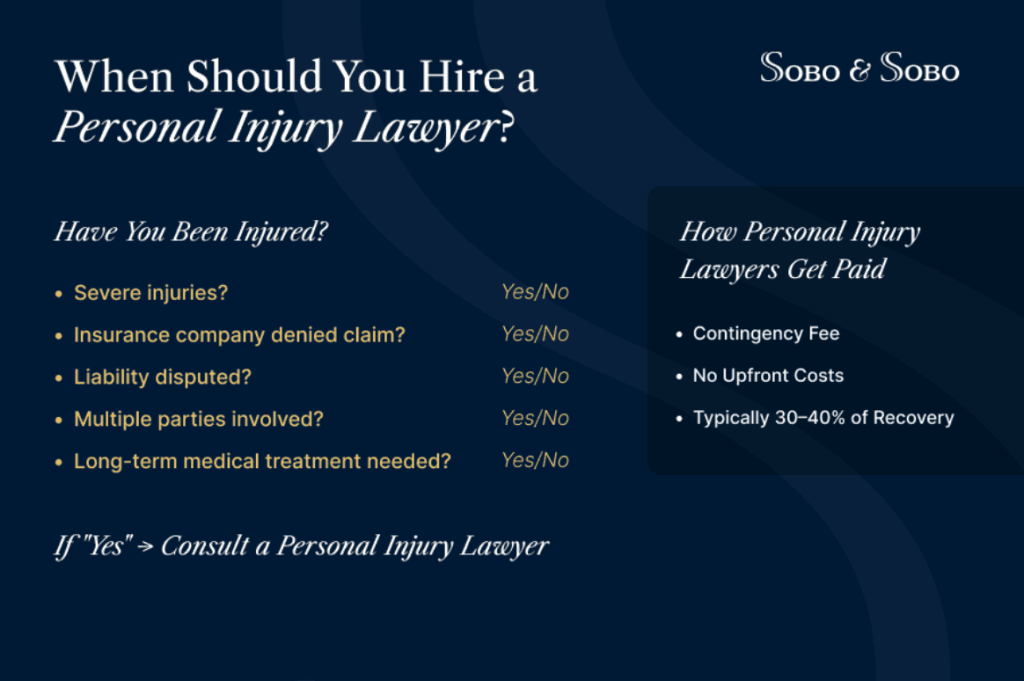
Caption: Learn the key situations where legal representation can help you protect the value of your claim after an accident
When Should You Hire a Personal Injury Lawyer?
The best time to speak with a personal injury lawyer is usually early in the process: before evidence disappears, deadlines approach, or the insurance company takes control of the conversation.
That does not mean that every case becomes a lawsuit. It means you can make decisions with a clearer understanding of your rights, risks, and options.
Why Acting Quickly Matters
Early legal involvement can help preserve evidence, document injuries, identify responsible parties, and prevent communication mistakes with insurance companies. Waiting too long can make a claim harder to prove, even when the facts are on your side.
Statutes of Limitations and Deadlines
Personal injury claims are subject to filing deadlines. These deadlines vary by state and by case type. Missing a deadline can prevent you from recovering compensation, no matter how serious your injury is.
Protecting Evidence Early
Important evidence may disappear over time.
Examples include:
- Surveillance footage
- Witness memories
- Accident scene conditions
- Vehicle damage
- Medical records
- Incident reports
- Property maintenance records
Some of this evidence may be available only for a limited time. Acting early can help protect it.
How Do Personal Injury Lawyers Get Paid?
Many people hesitate to call a lawyer because they are worried about cost. In personal injury cases, that concern is understandable.
Most personal injury lawyers work on a contingency fee basis. This means the attorney’s fee is tied to the outcome of the case rather than billed hourly.
Understanding Contingency Fees
In contingency fee arrangements, attorney fees are collected only if compensation is recovered. The fee is usually a percentage of the settlement or verdict you receive. The exact percentage should be explained in writing before representation begins.
No Upfront Costs Explained
In most personal injury cases, clients can begin the legal process without paying upfront attorney fees.
Most personal injury lawyers do not charge hourly fees or retainers for standard injury claims. This allows you to pursue a claim even if you are already dealing with medical bills, missed work, and other financial strain.
What Percentage Do Lawyers Typically Charge?
Contingency fee percentages vary according to firm, case type, and stage of the claim. During a consultation, the attorney should explain the fee agreement clearly before representation begins.
The exact percentage varies, but contingency fees commonly range between 30% and 40% of the recovery.
CTA: Learn more about contingency fees and your legal options by speaking with Sobo & Sobo today.
What Can a Personal Injury Lawyer Do for You?
A personal injury attorney works with you so you can understand what your claim may be worth, what evidence is needed, and how to respond when an insurance company challenges your case.
The value of legal help often comes from avoiding preventable mistakes: accepting a settlement too early, missing a deadline, giving a damaging statement, or failing to account for future medical needs.
Pursuing the Full Value of Your Claim
A lawyer can identify damages that may otherwise be overlooked, including future medical expenses and lost earning capacity.
This matters because a settlement is usually final. Once a claim is resolved, the injured person generally can’t go back later and ask for more money if the injury turns out to be worse than expected.
Reducing Stress During the Legal Process
Recovering from an injury is already difficult. Managing insurance calls, paperwork, deadlines, and settlement negotiations can add unnecessary pressure. Legal representation allows you to focus on healing while your attorney handles the claim.
Calculating Damages and Future Costs
A personal injury lawyer can help calculate:
- Medical expenses
- Lost wages
- Future treatment costs
- Pain and suffering
- Long-term financial losses
- Reduced earning capacity
- Long-term care needs
- Out-of-pocket expenses
The goal is to understand the full financial and personal impact of the injury before settlement negotiations begin.
Personal Injury Lawyer Responsibilities
A personal injury lawyer’s responsibilities go beyond filing forms. A strong legal team manages the details that can affect the outcome of a claim, including communication, evidence, deadlines, negotiations, strategy, and client guidance.
Communicating With Clients
Personal injury lawyers keep you informed about case developments, settlement offers, and legal options.
Good communication can help you avoid mistakes such as speaking with insurance company representatives without guidance or accepting an offer without understanding the full value of your claim.
Building Legal Strategies
No two personal injury cases are exactly alike. A lawyer may build a strategy around the available evidence, the severity of the injury, the insurance coverage involved, the conduct of the responsible party, and the likely defenses the other side may raise.
Managing Paperwork and Deadlines
Personal injury claims involve forms, filings, records, correspondence, settlement documents, and court deadlines. A lawyer manages these requirements so important details are not missed.
FAQs: What Is a Personal Injury Lawyer and Other Questions
What is a personal injury lawyer?
A personal injury lawyer represents people who were injured because of another party’s negligence. They help clients pursue compensation, gather evidence, negotiate with insurance companies, and move through the legal process.
How much does a personal injury lawyer cost?
Most personal injury lawyers work on a contingency fee basis. In many cases, clients pay no attorney fees unless compensation is recovered.
Can I handle a personal injury claim without a lawyer?
Yes, some minor claims can be handled without a lawyer. Claims involving serious injuries, disputed liability, multiple parties, or insurance complications often benefit from legal representation.
How long does a personal injury case take?
Every case is different. The timeline may depend on the severity of the injury, the length of medical treatment, whether liability is disputed, and whether the case settles or goes to litigation.
What should I bring to a free consultation?
Helpful items may include:
- Medical records
- Accident reports
- Photographs
- Insurance information
- Correspondence related to the claim
- Witness names and contact information
Questions About Personal Injury Claims?
After an accident, you do not have to figure out the legal process alone. A free consultation can help you understand your options, avoid early mistakes, and decide whether a personal injury lawyer is right for your situation.
Contact Sobo & Sobo today for a free consultation.
Note: This article is for general informational purposes only and does not create an attorney-client relationship. Personal injury laws, deadlines, and claim values vary by state and by case.