Un accidente de tráfico puede dejarte desconcertado y sin saber qué hacer a continuación.
En esos primeros momentos, es fácil pasar por alto pasos importantes que afectan a tu salud, a tu recuperación y a tu capacidad para reclamar una indemnización. Saber qué hacer tras un accidente de tráfico te ayuda a mantener la concentración, a proteger tus derechos y a evitar errores que pueden salirte caros.
Esta guía te explica paso a paso todo lo que debes hacer: desde el lugar del accidente hasta cómo gestionar el seguro, las lesiones y los pasos a seguir.
Ponte en contacto con Sobo & Sobo para una evaluación gratuita de tu caso
Qué hacer tras un accidente de tráfico: medidas inmediatas
Los primeros minutos tras un accidente son cruciales.
Comprueba si hay heridos y pide ayuda
Lo primero que debes hacer tras un accidente de tráfico: comprueba si tú, tus pasajeros y el resto de personas implicadas habéis sufridolesiones. Aunque te sientas bien,es posible quesíntomas como una conmoción cerebral o lesiones internasno se manifiestende inmediato.
Si alguien resulta herido, llama al 911 de inmediato. La atención médica inmediata protege tu salud y permite dejar constancia del incidente.
Dirígete a un lugar seguro
Si tu vehículo puede circular, sácalo de la vía pública. Enciende las luces de emergencia y espera en una zona segura.
Esto contribuye a reducir el riesgo de que se produzcan más accidentes, sobre todo en las carreteras con mucho tráfico.
Protege tus derechos y demuestra la responsabilidad civil
Una vez que todos estén a salvo, empieza a documentar lo que ha ocurrido.
Asegúrate de especificar el tipo deaccidente:
Llama a la policía
Solicita unatestado policialy anota el nombre del agente y el número de atestado.
Cuando el informe esté disponible, revísalo con atención y corrige cualquier error lo antes posible.
Hacer fotos y grabar vídeos
Captura:
- Posiciones de los vehículos y daños
- Condiciones de la carretera y señales de tráfico
- Matriculas
- Lesiones visibles
Si es posible, graba un breve vídeo de la escena. No edites ninguno de los archivos.
Recopilar información sobre los testigos
Recopila los nombres y los datos de contacto de todas las personas que hayan presenciado el accidente.
Las declaraciones de los testigos pueden respaldar tu versión de los hechos si se discute la responsabilidad.
Intercambio de información
Anota los datos del otro conductor:
- Nombre y datos de contacto
- Información sobre el seguro
- Datos del vehículo
Evita hablar de quién tiene la culpa en el lugar de los hechos.
Acude al médico
Acude al médico en un plazo de 24 horas, aunque los síntomas parezcan leves. Incluso si se trata de unaccidente en el que solo ha habido un coche implicado.
Los historiales médicos establecen la relación entre tus lesiones y el accidente y ayudan a respaldar tu reclamación. Además, recibir tratamiento cuanto antes reduce el riesgo de que surjan complicaciones más adelante.
No todas las lesiones implicanfracturas óseas. Aunque los síntomas parezcan leves al principio, afecciones como el latigazo cervical, las lesiones de tejidos blandos o los traumatismos internos pueden tardar horas o días en manifestarse.
Someterse a una evaluación temprana no solo protege tu salud, sino que también establece una cronología clara que vincula tus lesiones con el accidente. Esto puede marcar una diferencia significativa si más adelante se cuestiona tu reclamación.
Lleva un registro detallado
Lleva un control de todo lo relacionado con el accidente:
- Síntomas y recuperación
- Visitas médicas y gastos médicos
- Ausencias laborales
- Comunicaciones con las compañías de seguros
Una documentación bien organizada refuerza tu reclamación y ayuda a evitar disputas. Es un punto absolutamente imprescindible en tu lista de cosas que hacer tras un accidente de tráfico.
Llevar un registro bien organizado también facilita la respuesta a las solicitudes de las aseguradoras y ayuda a evitar retrasos.
Cuanto más claramente demuestre tu documentación cómo el accidente ha afectado a tu salud y a tu situación económica, más sólida será tu posición durante las negociaciones.
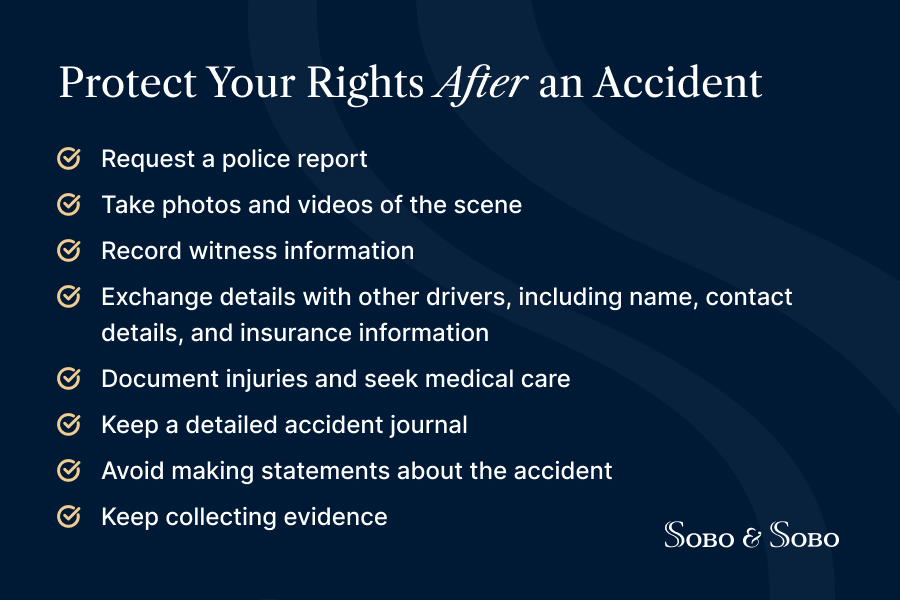
Título: Qué hacer tras un accidente de tráfico, paso a paso
Evita los errores más comunes
- No admitas la culpa
- No prestes declaración grabada sin que te orienten
- No publiques nada sobre el accidente en las redes sociales
- No aceptes ofertas de liquidación anticipada
Seguir recopilando pruebas
Seguimiento tras el accidente:
- Solicita las imágenes de las cámaras de vigilancia, si las hay
- Guardar los datos de la cámara de a bordo o del vehículo
- Mantén todos los documentos bien organizados
Actuar con prontitud ayuda a conservar las pruebas que, de otro modo, podrían perderse.
Habla hoy mismo con un abogado especializado en accidentes de tráfico
¿Qué hay que hacer tras un accidente de tráfico leve?
Incluso un accidente leve puede dar lugar a complicaciones.
Presentar una denuncia ante la policía
Un informe oficial ayuda a evitar disputas más adelante.
Estate atento a las lesiones de aparición tardía
Pueden aparecer síntomas comodolor de cuello, dolores de cabeza o molestias en la espalda unos días después.
Si se produce algún cambio, acude al médico sin demora.
Documentarlo todo
Las fotos, las notas y los registros pueden resultar importantes en caso de que se produzcan lesiones o surjan disputas.
Incluso los accidentes de baja gravedad pueden dar lugar a reclamaciones si posteriormente se detectan lesiones.
¿Qué hacer tras un accidente de tráfico? Evita cometer errores
Saber qué no hay que hacer es igual de importante.
No admitas la culpa
Incluso una simple disculpa puede utilizarse en tu contra más adelante.
No retrases la atención médica
Las interrupciones en el tratamiento pueden debilitar tu reclamación y generar dudas sobre tus lesiones.
No aceptes acuerdos rápidos
Las primeras ofertas suelen ser inferiores al valor que podría tener tu caso.
Dedicar tiempo a comprender tus lesiones y los daños sufridos te ayuda a garantizar una indemnización justa.
Qué hacer tras un accidente de tráfico si no ha sido culpa tuya
Si otro conductor ha provocado el accidente, es posible que tengas derecho a una indemnización.
Protégete con la documentación
Lleva un registro detallado y evita hablar con las compañías de seguros sin asesoramiento previo.
En algunos casos, es posible que tengas que notificarlo a tu propia compañía de seguros para mantener la cobertura.
Recopilar pruebas de responsabilidad civil
Las pruebas, como fotografías, declaraciones de testigos e informes, ayudan a determinar la responsabilidad.
En los casos más complejos, puede ser necesario un análisis pericial para aclarar cómo se produjo el accidente.
En algunas situaciones, es posible que la responsabilidad no quede clara de inmediato. Puede que se necesiten pruebas adicionales, como la reconstrucción del accidente, los datos del vehículo o el análisis de un perito, para explicar con detalle cómo se produjo el accidente.
Una sólida prueba de responsabilidad civil puede evitar disputas y reducir las posibilidades de que se retrase o se deniegue una reclamación.
Plantéate solicitar asesoramiento jurídico
Incluso cuando la responsabilidad parece clara, el asesoramiento jurídico puede ayudarte a proteger tus derechos, gestionar los plazos y evaluar tu reclamación con precisión.
Solicita hoy mismo una consulta gratuita
Cómo tratar tus lesiones tras un accidente de tráfico
Las lesiones pueden afectar a tu salud, a tu situación económica y a tu vida cotidiana. Atenderlas es un paso fundamental a la hora de saber qué hacer tras un accidente de tráfico.
Recibe atención médica inmediata
Acudeal médicolo antes posible, incluso si los síntomas son leves.
Seguir los planes de tratamiento
Acude a las citas de seguimiento y sigue las indicaciones médicas.
Una atención constante favorece tanto la recuperación como la documentación.
Comprender el impacto
Las lesiones pueden provocar:
- Ingresos perdidos
- Tratamiento en curso
- Menor calidad de vida
Una documentación médica clara contribuye a garantizar que estos efectos se tengan en cuenta en tu reclamación.

Leyenda: Incluso los accidentes leves pueden provocar latigazo cervical, distensión lumbar y lesiones en los tejidos blandos que no se manifiestan hasta días después.
Qué hacer con tu vehículo tras un accidente de tráfico
No lo olvides: en tu lista de cosas que hacer tras un accidente de coche también está el cuidado de tu vehículo. Tu coche necesita atención tras un choque.
Remolque y almacenamiento
Si tu coche no está en condiciones de circular, solicita un servicio de grúa a través de tu aseguradora o de un proveedor de confianza.
Ten en cuenta las tarifas de almacenamiento, que pueden aumentar rápidamente.
Presupuestos de reparación
Pide varios presupuestos y coordínate con tu compañía de seguros.
Unas evaluaciones precisas ayudan a garantizar que las reparaciones queden debidamente cubiertas.
Cuando tu coche sufre un siniestro total
Si los costes de reparación superan el valor del vehículo, este puede declararse siniestro total.
Es posible que tengas derecho a una indemnización basada en el valor de mercado. Si la oferta te parece baja, se puede revisar o negociar.
Lleva un registro de todos los gastos relacionados con el vehículo, incluidos los de grúa, almacenamiento, alquiler de vehículos y reparaciones.
Estos gastos pueden ser reembolsables como parte de tu reclamación, sobre todo si el accidente te deja sin un medio de transporte fiable.
Plantéate contratar a un abogado
Tramitar una reclamación por tu cuenta puede resultar abrumador.
Las compañías de seguros pueden:
- Respuestas con retraso
- Analiza tus lesiones
- Ofrecen acuerdos que no reflejan el valor total de tu reclamación
Un abogado puede ayudar a gestionar la comunicación, recabar pruebas y evaluar los daños y perjuicios.
En Sobo & Sobo:
- Llevar a cabo las negociaciones con las aseguradoras
- Documenta tu reclamación de forma exhaustiva
- Busca una indemnización justa acorde con tu situación
Trabajamos a comisión. No tendrás que pagar nada a menos que se consiga una indemnización.
Llama para solicitar una evaluación gratuita de tu caso
Si no tienes claro qué hacer a continuación, una consulta puede ayudarte a conocer tus opciones.
Recibirás:
- Orientaciones claras
- Una evaluación de tu caso
- Sin costes iniciales ni compromiso alguno
Actuar con antelación facilita la presentación de una reclamación sólida.
Qué hacer tras un accidente de tráfico: preguntas frecuentes
¿Necesito un abogado para un accidente leve?
No siempre, pero el asesoramiento jurídico puede resultar de ayuda en caso de lesiones o disputas. Es un paso importante a la hora de saber qué hacer tras unaccidente de tráfico, pero no es el primero.
¿Cuál es el plazo para presentar una reclamación?
Los plazos varían según el estado, por lo que es importante actuar con prontitud.
¿Cómo sé qué hacer tras un accidente de tráfico si el otro conductor no tiene seguro?
Es posible que se aplique tu cobertura para conductores sin seguro.
¿Cuánto vale mi caso?
Depende de tus lesiones, gastos y otros factores.
¿Cuál es la mejor guía sobre qué hacer tras un accidente de coche?
- Comprueba si hay heridos y pide ayuda
- Dirígete a un lugar seguro
- Llama a la policía y solicita que se levante un atestado.
- Haz fotos y graba vídeos
- Registrar los datos de los testigos
- Intercambia datos con los demás conductores, como el nombre, los datos de contacto y la información del seguro.
- Acude al médico en un plazo de 24 horas, aunque los síntomas parezcan leves.
- Documentar las lesiones
- Lleva un registro detallado
- Evita hacer declaraciones sobre el accidente
- Sigue recopilando pruebas
Concierta una cita para una evaluación gratuita de tu caso