Tras un accidente, puede resultar difícil saber qué hacer primero. Es posible que tengas que lidiar al mismo tiempo con el dolor, las citas médicas, las bajas laborales, las facturas de las reparaciones y las llamadas de la compañía de seguros.
Una reclamaciónpor daños personaleses una solicitud de indemnización cuando la negligencia de otra persona ha provocado una lesión. Dependiendo del caso, el proceso puede incluir historiales médicos, informes de accidentes, formularios de seguros, negociaciones para llegar a un acuerdo y, en ocasiones, una demanda judicial.
No es necesario que tengas claro todo el proceso antes de hacer la primera llamada. Lo más importante en esta primera fase es recibir asistencia médica, conservar las pruebas, evitar tomar decisiones precipitadas e informarte de los plazos que puedan aplicarse.
¿En qué consiste el proceso de reclamación | Sobo
Este proceso es el camino que sigue una persona lesionada para reclamar una indemnización tras un accidente causado por la negligencia de otra persona. Ese camino varía en función de cada caso.
Un accidente de tráfico, un accidente por resbalón y caída, una lesión laboral, un accidente en la obra, una demanda por negligencia médica o un caso de homicidio culposo pueden implicar, cada uno de ellos, pruebas, cuestiones relacionadas con los seguros y plazos distintos.
Cómo funciona el proceso de reclamación por daños personales
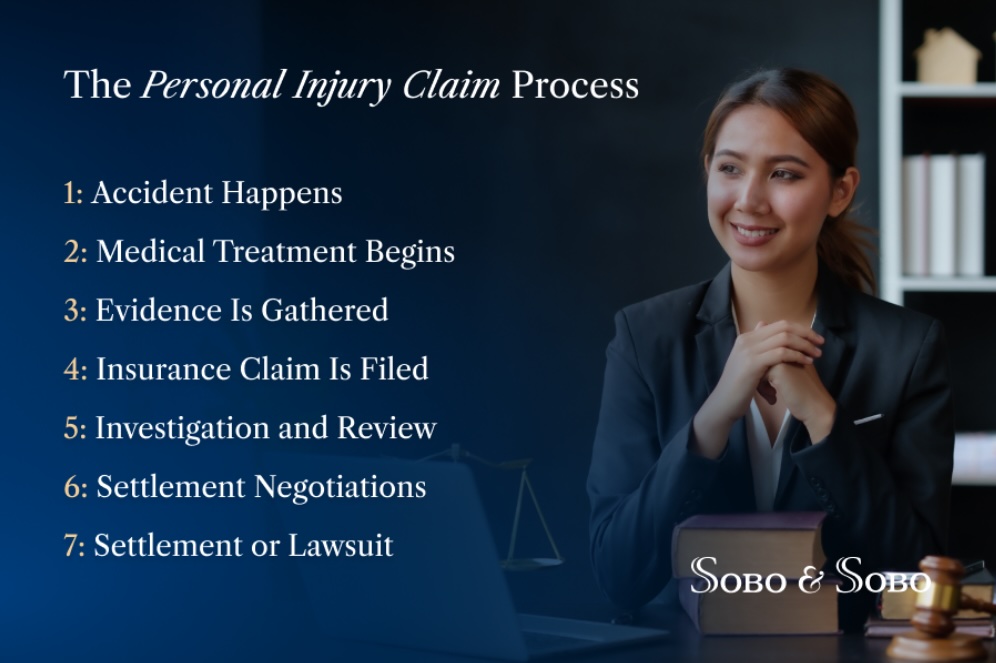
La mayoría de las reclamaciones por lesiones comienzan con la asistencia médica, la recopilación de pruebas y la notificación a la compañía de seguros. A partir de ahí, el caso suele pasar a la fase de investigación, revisión de la reclamación y negociaciones para llegar a un acuerdo. Si las partes no logran resolver la controversia, puede llegar a producirse un litigio.
Muchas reclamaciones se resuelven antes del juicio. Puede ser necesario interponer una demanda si la compañía de seguros niega su responsabilidad, retrasa la tramitación de la reclamación, pone en duda la lesión u ofrece una indemnización muy inferior al valor que parece tener el caso.
Por qué es importante comprender el proceso de reclamación por daños personales
Conocerlos pasos que hay que seguir en el proceso de reclamación por daños personalespuede hacer que todo el proceso resulte menos impredecible.
Un error que se comete a menudo es dar por sentado que el perito de seguros se limita a recabar datos. Es cierto que los peritos necesitan información, pero también evalúan si algo de lo que digas puede utilizarse para reducir el valor de la reclamación. Por eso conviene tener cuidado con las declaraciones grabadas,las publicaciones en redes sociales, los formularios de acuerdo y las autorizaciones médicas generales.
Paso 1: Acudir al médico tras el accidente
Tras un accidente, la atención médica debe ser lo primero. Algunas lesiones pueden parecer leves en ese momento, sobre todo cuando los niveles de adrenalina son altos, pero se vuelven más dolorosas en las horas o días siguientes. Además, una exploración inmediata permite crear un historial médico que relaciona tus síntomas con el accidente.
Por qué son importantes los historiales médicos
Los historiales médicos no solo sirven para demostrar que has acudido al médico. Ayudan a reconstruir la cronología de la lesión. Muestran cuándo aparecieron los síntomas, cuál fue el diagnóstico del profesional sanitario, qué tratamiento se recomendó, si fue necesario un seguimiento y cómo afectó la lesión a tu trabajo o a tu rutina diaria.
Las compañías de seguros suelen examinar minuciosamente estos registros a la hora de decidir si aceptan, rechazan o infravaloran una reclamación.
Seguimiento de las recomendaciones terapéuticas
Sigue las instrucciones de tu médico lo mejor que puedas.
Esto puede implicar acudir a citas de seguimiento, asistir a sesiones de fisioterapia, tomar la medicación recetada o acudir a un especialista.
Las citas a las que no se acude pueden dar pie a que la compañía de seguros argumente que la lesión no era grave, que el paciente retrasó su recuperación o que el tratamiento no era realmente necesario.
Paso 2: Recopilar pruebas y documentación
Una vez atendidas las necesidades médicas inmediatas, empieza a guardar todo lo que pueda ayudar a demostrar lo que ocurrió y cómo te afectó la lesión. Las pruebas suelen ser más sólidas cuando se recogen cuanto antes, antes de que cambie la situación en el lugar de los hechos, resulte más difícil localizar a los testigos o se extravíen los documentos.
Informes de accidentes
Los informes de accidentes pueden resultar especialmente útiles, ya que recogen los datos básicos poco después de que se produzca el incidente. Dependiendo del lugar donde se haya producido la lesión, el informe puede proceder de la policía, del propietario del inmueble, del empresario, de una empresa o de cualquier otra parte que haya intervenido. Puede incluir la fecha, el lugar, las personas implicadas, las declaraciones iniciales, las condiciones meteorológicas, los riesgos u otros detalles que ayuden a explicar el accidente.
Pide una copia siempre que sea posible.
Fotografías y declaraciones de testigos
Las fotos pueden ayudar a que una reclamación resulte más fácil de entender. Haz fotos de los daños del vehículo, de las condiciones de inseguridad de la propiedad, de las lesiones visibles, de los bienes dañados, del equipo defectuoso, de las señales de advertencia o de la ausencia de estas. Si alguien ha visto lo ocurrido, anota su nombre y datos de contacto lo antes posible.
Gastos médicos y salarios no percibidos
Guarda los documentos que justifiquen los gastos relacionados con el accidente, como facturas médicas, recibos de medicamentos recetados, gastos de terapia, gastos de transporte para acudir a las citas, nóminas, notas de la empresa y documentos que acrediten las bajas laborales o la reducción de jornada.
Estos documentos relacionan la lesión con pérdidas económicas reales. Además, dejan a la compañía de seguros menos margen para alegar que los gastos no están claros o carecen de justificación.
Paso 3: Ponte en contacto con un abogado especializado en lesiones personales
No es necesario que tengas todos los documentos antes de hablar con un abogado especializado en lesiones personales de primer nivel. Una conversación temprana puede ayudar a identificar quién podría ser el responsable, qué seguro podría ser aplicable, qué plazos son importantes y qué pruebas deben conservarse.
Cómo evalúan los abogados las reclamaciones
Un abogado puede analizar cómo se produjo el accidente, quién podría ser el responsable, qué cobertura de seguro existe, cuál es la gravedad de las lesiones, si se ha producido una pérdida de ingresos, si se prevén secuelas a largo plazo y qué plazos pueden aplicarse.
El objetivo no es simplemente iniciar un expediente. Se trata de comprender en qué aspectos la reclamación es sólida, en cuáles la compañía de seguros podría poner objeciones y qué es lo que aún hay que documentar.
Entender la responsabilidad civil y los daños y perjuicios
La responsabilidad civil es la responsabilidad legal derivada del accidente. Los daños y perjuicios son las pérdidas causadas por las lesiones.
La mayoría de las reclamaciones por lesiones se basan en dos aspectos: quién causó el daño y cuánto le ha costado el accidente a la persona lesionada en concepto de asistencia médica, días de baja laboral, dolor, limitaciones o secuelas a largo plazo.
Paso 4: Presentar una reclamación por daños personales
El siguiente paso en el proceso de reclamaciónpor daños personales: presentar la reclamación. Esto implica notificar a la compañía de seguros responsable que has sufrido lesiones y que solicitas una indemnización.
Puede que esto parezca sencillo, pero los primeros formularios, declaraciones y autorizaciones pueden influir en la forma en que la compañía de seguros evalúa el caso.
Proceso de tramitación de reclamaciones de seguros
La reclamación puede presentarse ante una compañía de seguros de automóvil o de hogar, una aseguradora de responsabilidad civil empresarial, la compañía de seguros de un proveedor de servicios médicos o la compañía de seguros de otra parte responsable. La compañía de seguros puede solicitar formularios, declaraciones, documentos o autorizaciones.
Ten cuidado antes de prestar una declaración grabada o de firmar documentos que no comprendas del todo.
Plazos y requisitos legales
Todos los casos de lesiones tienen plazos límite. El plazo puede depender del tipo de accidente, del lugar donde se produjo, de quién lo causó y de si interviene algún organismo público o se aplica alguna norma jurídica específica. Esperar demasiado tiempo puede afectar a tu derecho a obtener una indemnización.
Paso 5: Investigación y revisión del caso
Una vez tramitada la reclamación, la compañía de seguros investiga lo ocurrido. La persona lesionada y su abogado deberían hacer lo mismo: recopilar documentación, aclarar la responsabilidad, documentar el tratamiento e identificar los aspectos que la compañía de seguros probablemente vaya a impugnar.
Investigaciones de compañías de seguros
La compañía de seguros puede examinar los informes del accidente, los historiales médicos, las fotografías, los presupuestos de reparación, las declaraciones de los testigos, las reclamaciones anteriores y cualquier cosa que la persona lesionada haya dicho sobre el accidente.
Su función no consiste únicamente en recabar datos. También consiste en decidir si asume la responsabilidad y qué valor le atribuye a la reclamación.
Revisión de la evidencia médica
Las pruebas médicas ayudan a demostrar la relación entre el accidente y la lesión. También pueden indicar si el tratamiento sigue en curso, si la lesión afecta al trabajo y si podría ser necesaria asistencia médica en el futuro.
Determinación de la culpa
La culpa no siempre es evidente. Un conductor puede negar haber provocado un accidente. Una tienda puede negar haber tenido conocimiento de un derrame. El propietario de un inmueble puede culpar a la persona lesionada. Una compañía de seguros puede alegar que la lesión ya existía previamente.
Un análisis minucioso puede poner de manifiesto en qué aspectos las pruebas son sólidas, en cuáles la compañía de seguros podría poner objeciones y qué es lo que aún hay que documentar.
Paso 6: Negociaciones para llegar a un acuerdo
Muchas reclamaciones por daños personales se resuelven mediante un acuerdo extrajudicial. Esto significa que la persona lesionada acepta una indemnización a cambio de poner fin a la reclamación.
Cartas de reclamación y negociaciones
Una carta de reclamación suele explicar cómo se produjo el accidente, por qué la otra parte es responsable, qué lesiones se sufrieron, qué tratamiento fue necesario, qué ingresos se perdieron y qué indemnización se solicita.
Las negociaciones forman parte del proceso de reclamación por daños personales. Esta fase del proceso puede implicar numerosas idas y venidas antes de que ambas partes lleguen a un acuerdo sobre una cantidad.
Una primera oferta baja no siempre significa que la reclamación sea débil. A veces se trata de una táctica de negociación y, otras veces, refleja una controversia real sobre la responsabilidad, el tratamiento médico o las consecuencias a largo plazo de la lesión.
La tramitación de una reclamación puede ralentizarse por motivos que no tienen nada que ver con que la persona lesionada haya cometido algún error. A veces, la compañía de seguros está a la espera de los informes médicos definitivos. Otras veces, las partes discrepan sobre la responsabilidad, la asistencia médica futura o la cuantía de la indemnización por daños morales.
Evaluación de las ofertas de acuerdo
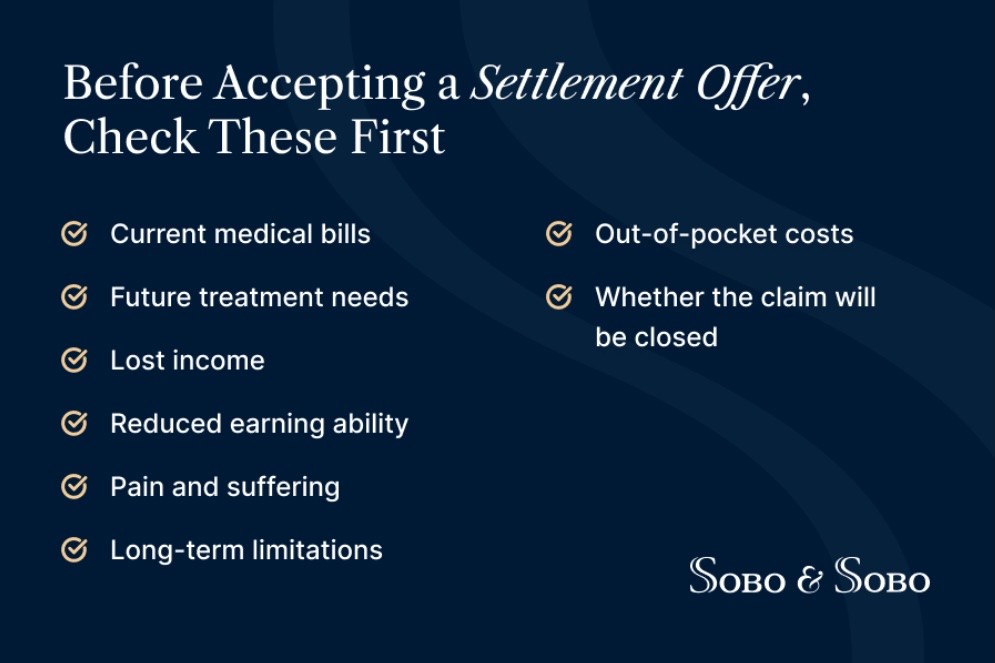
Una oferta de indemnización debe tener en cuenta las facturas médicas actuales, los tratamientos futuros, la pérdida de ingresos, la merma de la capacidad de generar ingresos, el dolor y el sufrimiento, las limitaciones a largo plazo y los gastos de su propio bolsillo.
Una vez resuelta una reclamación, normalmente se da por cerrada. Por eso, una oferta rápida no siempre es una oferta justa, sobre todo si el tratamiento aún no ha concluido o si no están claras las consecuencias a largo plazo.
Cuándo pueden fracasar las negociaciones
Las negociaciones pueden fracasar cuando la compañía de seguros niega su responsabilidad, cuestiona la lesión, retrasa la comunicación, ofrece una indemnización insuficiente, ignora las necesidades médicas futuras o se niega a tener en cuenta el dolor y el sufrimiento. Si las negociaciones para llegar a un acuerdo no dan lugar a un resultado justo, el siguiente paso podría ser interponer una demanda.
Paso 7: Interponer una demanda por daños personales
Presentar una demanda no significa que el caso vaya a ir automáticamente a juicio. Significa que la reclamación ha pasado a tramitarse en los tribunales porque las partes no han resuelto la controversia.
Cuándo es necesario recurrir a las vías judiciales
Puede ser necesario interponer una demanda cuando la compañía de seguros deniega la reclamación, impugna la responsabilidad, retrasa el caso, presenta una oferta demasiado baja o se niega a tener en cuenta lesiones graves. A veces también se interpone una demanda porque se acerca un plazo legal.
Plazos procesales
La fase procesal puede durar meses o incluso más tiempo, dependiendo del tribunal, de la complejidad del caso y del grado de desacuerdo entre las partes.
Muchas demandas siguen resolviéndose mediante un acuerdo antes del juicio, pero una preparación minuciosa ayuda a proteger los intereses de la persona lesionada en cada fase del proceso.
Investigación y procedimientos judiciales
La fase de presentación de pruebases la etapa en la que ambas partes intercambian información. Puede incluir preguntas por escrito, solicitudes de documentos, declaraciones, revisión de historiales médicos, dictámenes periciales, reuniones en el juzgado, mociones, negociaciones para llegar a un acuerdo y preparación del juicio.
¿Cuánto tiempo tarda en resolverse una reclamación por daños personales?
No hay un plazo único. El proceso de reclamación por daños personales a veces culmina en un acuerdo rápido. Otras veces se alarga más porque el tratamiento, la investigación o el litigio aún están en curso.
Factores que influyen en los plazos
Los plazos suelen depender de la gravedad de las lesiones, el tratamiento médico, la controversia sobre la responsabilidad, los retrasos de las compañías de seguros, la implicación de varias partes, la incertidumbre sobre las necesidades de asistencia futuras y la necesidad o no de interponer una demanda.
Plazos de los acuerdos extrajudiciales frente a los de los litigios
Aunque llegar a un acuerdo puede ser más rápido que ir a juicio, la rapidez no debería ser el único objetivo. Es posible que un acuerdo rápido no tenga en cuenta el tratamiento futuro, el dolor a largo plazo, la pérdida de ingresos o las limitaciones permanentes.
Dificultades habituales durante el proceso de tramitación de reclamaciones
Una reclamación puede resultar estresante cuando la compañía de seguros pone trabas, solicita más información o retrasa la liquidación, mientras la persona lesionada sigue lidiando con el dolor, las facturas y las bajas laborales.
Denegaciones de reclamaciones
Una reclamación puede ser denegada si la compañía de seguros alega que su cliente no fue responsable, que la lesión no guardaba relación con el siniestro o que no hay pruebas suficientes. Una denegación no siempre significa que el caso haya terminado.
Conflictos relacionados con los seguros
Los litigios con las aseguradoras pueden versar sobre la responsabilidad, el tratamiento médico, la gravedad de las lesiones, los salarios perdidos o el importe de la indemnización. Guarda un registro de todas las llamadas, cartas, correos electrónicos, facturas, citas y solicitudes de la compañía de seguros.
Liquidaciones retrasadas
Pueden producirse retrasos cuando las compañías de seguros solicitan más documentación, cuestionan el tratamiento, impugnan la responsabilidad o esperan a ver si la lesión mejora. Cuando los retrasos se acumulan, un abogado puede presionar para obtener respuestas y asegurarse de que no se incumplan los plazos importantes.
¿Qué indemnización puedes reclamar?
La indemnización depende de las circunstancias concretas del caso, del seguro disponible, de la gravedad de las lesiones y de cómo el accidente haya afectado a la vida de la persona lesionada. El objetivo es documentar tanto las pérdidas económicas como el impacto personal de la lesión.
Gastos médicos
Los gastos médicos pueden incluir tratamientos de urgencia, atención hospitalaria, intervenciones quirúrgicas, consultas médicas, fisioterapia, medicación, productos sanitarios y necesidades de atención futuras.
Pérdida de ingresos
Los ingresos perdidos pueden incluir salarios no percibidos, reducción de la jornada laboral, pérdida de la capacidad de generar ingresos o pérdida de ingresos empresariales.
Guarda los recibos de nómina, los documentos fiscales, las cartas de la empresa y los certificados de limitaciones laborales.
Dolor y sufrimiento
El dolor y el sufrimiento pueden incluir el dolor físico, la angustia emocional, la pérdida de disfrute de la vida, los problemas de sueño, las limitaciones en la vida cotidiana y el impacto general de la lesión. Estos daños suelen ser objeto de controversia, por lo que la documentación es fundamental.
Por qué puede ser útil contratar a un abogado especializado en lesiones personales
Se contrata a un abogado especializado en lesiones personales para que se encargue de tratar con la compañía de seguros, recopilar pruebas, llevar un control de los plazos y ayudar a preparar el caso, mientras que la persona lesionada se centra en su recuperación.
Cómo negociar con las compañías de seguros
Las compañías de seguros tramitan reclamaciones a diario. Un abogado especializado en lesiones personales puede encargarse de la comunicación, responder a las disputas, organizar las pruebas y rebatir las ofertas demasiado bajas.
En busca de una indemnización justa
Un abogado puede ayudarte a determinar el alcance total de las consecuencias de la lesión, incluidos los gastos médicos, la pérdida de ingresos, los cuidados futuros, el dolor y el sufrimiento, y las limitaciones a largo plazo.
El objetivo es reclamar una indemnización que refleje el coste real de la lesión.
Gestión de litigios en caso necesario
Si fuera necesario iniciar una demanda, un abogado puede preparar los escritos, gestionar los plazos, ocuparse de la fase de presentación de pruebas, negociar durante el litigio y representar a la persona lesionada ante el tribunal.
Habla con un abogado especializado en lesiones personales
Si has resultado herido en un accidente, obtener respuestas cuanto antes puede ayudarte a evitar tomar decisiones precipitadas. Sobo & Sobo puede analizar lo ocurrido, explicarte los plazos que pueden aplicarse y ayudarte a comprender cuáles pueden ser los siguientes pasos a seguir.
Consulta gratuita
Puedes plantear tus dudas, contarnos lo que ha ocurrido y averiguar si tienes derecho a reclamar una indemnización por daños personales. Sobo & Sobo ofrececonsultas gratuitas y sin compromiso.
Analiza tu accidente y las opciones de reclamación
Es conveniente estar preparado para explicar cómo ocurrió el accidente, dónde tuvo lugar, qué lesiones sufriste, qué tratamiento recibiste, si la aseguradora se ha puesto en contacto contigo, si has faltado al trabajo y qué documentos tienes hasta ahora.
Preguntas frecuentes sobre el proceso de reclamación por daños personales
¿Cómo funciona el proceso de reclamación por daños personales?
El proceso de reclamación por daños personales suele comenzar con el tratamiento médico, la recopilación de pruebas y la presentación de una reclamación al seguro. Puede continuar con la investigación, las negociaciones para llegar a un acuerdo y un posible litigio.
¿Cuánto tiempo dura el proceso de reclamación por daños personales?
Los plazos varían. Una reclamación sencilla puede resolverse con bastante rapidez, mientras que las lesiones graves, los casos en los que existe controversia sobre la responsabilidad, los tratamientos en curso o los litigios pueden alargar el proceso.
¿Qué ocurre una vez iniciado el proceso de reclamación por daños personales?
La compañía de seguros suele investigar el accidente, revisar los historiales médicos, evaluar la responsabilidad y, en su caso, iniciar las negociaciones para llegar a un acuerdo.
¿Todas las reclamaciones por daños personales llegan a los tribunales?
No. Muchas reclamaciones por daños personales se resuelven antes del juicio. Puede ser necesario presentar una demanda cuando la compañía de seguros niega su responsabilidad, retrasa la tramitación de la reclamación u ofrece una indemnización demasiado baja.
¿Cómo se negocian los acuerdos por daños personales?
Las negociaciones para llegar a un acuerdo suelen comenzar con una carta de reclamación. Ambas partes analizan la responsabilidad, las lesiones, los gastos médicos, la pérdida de ingresos y otros perjuicios antes de intentar llegar a un acuerdo sobre la indemnización.
¿Están sujetos a impuestos los acuerdos por daños personales?
Es posible quealgunas partesde las indemnizaciones por daños personalesestén sujetas a impuestos. Consulte este asunto con su abogado y con un profesional fiscal cualificado.
¿Qué pruebas son necesarias durante el proceso de reclamación por daños personales?
Entre las pruebas útiles suelen figurar los informes del accidente, las fotografías, las declaraciones de los testigos, los historiales médicos, las facturas, las pruebas de la pérdida de ingresos, la correspondencia con la compañía de seguros y las notas sobre las limitaciones en la vida cotidiana.
¿Cuándo debo ponerme en contacto con un abogado durante el proceso de reclamación por daños personales?
A menudo resulta útil ponerse en contacto con un abogado lo antes posible tras un accidente, sobre todo si las lesiones son graves, si existe controversia sobre la responsabilidad, si la compañía de seguros se ha puesto en contacto contigo o si pueden aplicarse plazos límite.
¿Cuánto cuesta un abogado especializado en lesiones personales?
La mayoría de los abogados especializados en lesiones personales trabajan a comisión, lo que significa que no hay que pagar los honorarios por adelantado. En su lugar, los honorarios se cobran como un porcentaje de laindemnización obtenida, en caso de quese consiga. Esto permite a las personas lesionadas obtener asistencia jurídica sin tener que pagar de su propio bolsillo al inicio del caso de lesiones personales, mientras siguen centradas en la atención médica y la recuperación.
¿Qué indemnización puedo obtener en una demanda por daños personales?
La indemnización puede incluir gastos médicos, pérdida de ingresos, cuidados futuros, disminución de la capacidad de generar ingresos, daños morales y otras pérdidas, en función de las circunstancias concretas de su caso.