No todas las reclamaciones por daños personales comienzan de la misma manera. Una persona puede ser atropellada por un conductor distraído. Otra puede sufrir una caída porque una empresa haya ignorado una situación de peligro. Y otra persona puede sufrir daños a causa de un error médico, un producto defectuoso, un lugar de trabajo inseguro o un perro agresivo.
Cuando alguien resulta lesionado porque otra persona, un negocio, un propietario, un proveedor de asistencia sanitaria o una empresa no ha actuado con la diligencia debida, puede ser posible presentar una reclamación por daños personales.
Conocer cómo se clasifican las reclamaciones por lesiones puede ayudarte a entender qué pruebas pueden ser relevantes, quién puede ser responsable y qué pasos a seguir pueden proteger tu reclamación. La mayoría de las reclamaciones se basan en la negligencia, lo que significa que las acciones —o la omisión— de otra parte contribuyeron a la lesión.
Esta guía explica los tipos más habituales de casos de daños personales, cómo funcionan las reclamaciones por daños personales y la indemnización a la que pueden tener derecho las personas lesionadas.
¿Tienes dudas sobre tus opciones legales? Concierta una evaluación gratuita de tu caso.
¿Qué es un caso de daños personales?
Se produce un caso de daños personales cuando alguien sufre un perjuicio físico, emocional o económico debido a la negligencia o a la conducta ilícita de otra parte.
El derecho de daños personales ofrece a las personas lesionadas la posibilidad de reclamar una indemnización por las pérdidas relacionadas con un accidente, una situación de inseguridad o una conducta ilícita.
¿Qué se considera un caso de lesiones personales?
No todas las lesiones dan lugar a una reclamación legal válida.
Para que una reclamación sea válida, suele ser necesario responder a cuatro preguntas básicas:
- ¿Ha resultado herido alguien?
- ¿Tenía otra parte la obligación de actuar con diligencia?
- ¿Actuó esa parte de forma imprudente o indebida?
- ¿Fue esa conducta la que provocó la lesión?
Por ejemplo, un conductor que se salte un semáforo en rojo y provoque un accidente puede ser responsable de las lesiones resultantes. El propietario de un inmueble que ignore una situación de peligro también puede ser responsable si alguien resulta herido a causa de ese peligro.
Descubre más sobre qué es un abogado especializado en lesiones personales y cómo puede defenderte.
Cómo funcionan las reclamaciones por daños personales
Tras un accidente, lo primero que hay que hacer suele ser averiguar qué ha ocurrido y conservar las pruebas antes de que desaparezcan.
Según el caso, esto puede implicar:
- Expedientes de seguros
- Historiales médicos
- Declaraciones de los testigos
- Informes de accidentes
- Fotos o vídeos
- Revisión de expertos
Muchas reclamaciones se resuelven mediante negociación, pero puede ser necesario recurrir a los tribunales cuando las partes no se ponen de acuerdo sobre la responsabilidad, las lesiones, los daños o la cobertura del seguro.
Infórmate sobre el proceso de una demanda por daños personales.
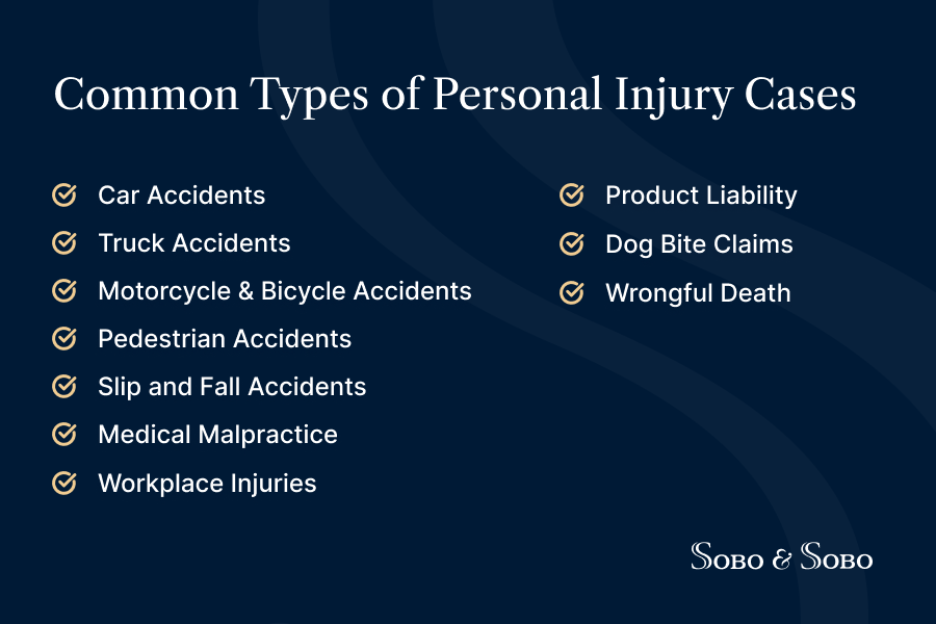
Leyenda: Entre los casos más habituales de daños personales se incluyen los accidentes de tráfico, las reclamaciones por responsabilidad civil de propietarios de inmuebles, la negligencia médica y los accidentes laborales.
Tipos más comunes de casos de lesiones personales
El derecho de daños personales abarca numerosos accidentes, lesiones y partes responsables. Algunas reclamaciones son más habituales porque están relacionadas con riesgos cotidianos: conducir, caminar, trabajar, acudir a establecimientos comerciales, recibir asistencia médica o utilizar productos de consumo.
Reclamaciones por lesiones derivadas de accidentes de tráfico
Los accidentes de tráfico se encuentran entre los casos más habituales de lesiones personales. Los datos de los Centros para el Control y la Prevención de Enfermedades muestran que, durante el periodo 2019-20, las lesiones provocadas por accidentes de tráfico dieron lugar a una media de 3,8 millones de visitas a urgencias al año en Estados Unidos.
Pueden surgir reclamaciones cuando un conductor provoca un accidente por:
- Conducción distraída
- Exceso de velocidad
- Conducir bajo los efectos del alcohol
- Conducción temeraria
- Incumplimiento de las normas de tráfico
Las lesiones pueden ir desde daños leves en los tejidos blandos hasta lesiones cerebrales traumáticas y lesiones medulares.
La indemnización en este tipo de casos de lesiones personales puede incluir los gastos médicos, la pérdida de ingresos, los daños materiales, el dolor y el sufrimiento, y las necesidades de asistencia futuras, en función de las circunstancias concretas de la reclamación.
Más información sobre los accidentes de tráfico.
Demandas por accidentes de camión
Los accidentes de camiones comerciales pueden dar lugar a reclamaciones más complejas que las derivadas de los accidentes de tráfico habituales. Esto se debe a que puede haber más de una persona o empresa que haya contribuido a la colisión. Entre las partes responsables pueden figurar:
- Conductores de camión
- Empresas de transporte por carretera
- Empresas de mantenimiento
- Empresas de carga de mercancías
- Fabricantes de vehículos o de piezas
Estas reclamaciones pueden requerir la revisión de los registros de los conductores, los registros de mantenimiento, los informes de inspección, las prácticas de contratación, los registros de carga y la cobertura del seguro.
Casos de accidentes de motocicleta y bicicleta
Los motociclistas y los ciclistas cuentan con menos protección que los ocupantes de los turismos. Estas reclamaciones también pueden incluir suposiciones injustas sobre los conductores de motocicletas y bicicletas, la visibilidad, la velocidad o quién tenía prioridad de paso.
Como consecuencia, los accidentes suelen provocar lesiones graves, entre las que se incluyen:
- Huesos rotos
- Herida por abrasión
- Lesiones en la cabeza
- Lesiones en el cuello y la espalda
Las disputas suelen girar en torno a si el conductor vio al ciclista, dejó suficiente espacio, cedió el paso correctamente o intentó echarle la culpa a otra persona tras el accidente.
Lesiones por accidentes de peatones
Las reclamaciones por accidentes de peatones suelen partir de una pregunta básica: ¿vio el conductor a la persona que caminaba y tuvo tiempo y espacio suficientes para frenar?
Estos accidentes pueden producirse en pasos de peatones, aparcamientos, cruces, zonas escolares o en carreteras que carecen de un espacio seguro para los peatones.
Entre las causas más comunes se encuentran:
- Conducción distraída
- No ceder el paso
- Exceso de velocidad
- Conducción bajo los efectos del alcohol o de sustancias
Dado que los peatones carecen de protección física, incluso un choque a baja velocidad puede provocar lesiones graves.
Más información sobre las lesiones de los peatones.
Accidentes por resbalones y caídas
Los accidentes por resbalones y caídas son un tipo habitual de reclamación por responsabilidad civil de los propietarios de inmuebles.
Por lo general, los propietarios tienen la responsabilidad de garantizar unas condiciones razonablemente seguras para los visitantes. La cuestión clave suele ser si el propietario conocía, o debería haber conocido, la existencia del peligro.
Entre los riesgos que pueden provocar un resbalón y una caída se incluyen:
- Suelos mojados
- Aceras irregulares
- Iluminación deficiente
- Escaleras rotas
- Problemas de mantenimiento sin resolver
Que se pueda considerar responsable al propietario de un inmueble depende de las circunstancias concretas del caso y de si se tomaron las medidas razonables para hacer frente al peligro.
Más información sobre las reclamaciones por responsabilidad civil por las instalaciones.
Reclamaciones por negligencia médica
Un mal resultado médico no siempre supone una negligencia. La cuestión es si un profesional sanitario incumplió el nivel de atención aceptado y, como consecuencia, causó un perjuicio.
Cuando no lo hacen y un paciente sufre daños, puede surgir una demanda por negligencia médica derivada de factores como:
- Errores quirúrgicos
- Diagnóstico erróneo
- Diagnóstico tardío
- Errores en la medicación
- Lesiones durante el parto
Estas reclamaciones suelen requerir el dictamen de un experto para determinar qué debería haber ocurrido, qué falló y si la actuación del profesional sanitario no se ajustó a los estándares médicos aceptados.
Más información sobre los casos de negligencia médica.
Accidentes laborales y de construcción
Los accidentes laborales se producen en muchos sectores, pero son especialmente frecuentes en la construcción, la industria manufacturera y el transporte.
Algunos ejemplos comunes son:
- Caídas desde altura
- Accidentes con maquinaria
- Lesiones por electrocución
- Accidentes por caída de objetos
Algunos trabajadores lesionados pueden tener derecho a prestaciones de indemnización por accidente laboral. Otros también pueden presentar una reclamación contra terceros si alguien ajeno a la empresa, como un contratista, un conductor, el propietario de un inmueble o el fabricante de un equipo, ha contribuido a que se produjera el accidente.
Más información sobre las prestaciones por accidentes laborales.
Responsabilidad por productos defectuosos y productos defectuosos
Las reclamaciones por responsabilidad por productos defectuosos se centran en determinar si un producto era peligroso debido a su diseño, fabricación, etiquetado o mantenimiento.
Puede surgir una reclamación por responsabilidad por productos defectuosos cuando se produce una lesión causada por:
- Defectos de diseño
- Defectos de fabricación
- Advertencias insuficientes
- Dispositivos de seguridad defectuosos
En estos casos, suele ser necesario conservar el propio producto, el embalaje, los manuales, las advertencias, los comprobantes de compra y el historial de reparaciones.
Reclamaciones por lesiones causadas por mordeduras de perro
Los propietarios de perros pueden ser responsables cuando un animal ataca o lesiona a otra persona. Según las cifras del Instituto de Información sobre Seguros, las aseguradoras estadounidenses registraron 28 450 reclamaciones por mordeduras de perro y lesiones relacionadas en 2025.
Las reclamaciones por mordeduras de perro pueden estar relacionadas con lesiones físicas, riesgos de infección, cicatrices y traumas emocionales, sobre todo cuando la víctima es un niño.
Las lesiones pueden incluir:
- Heridas punzantes
- Infecciones
- Cicatrices
- Daño nervioso
- Trauma emocional
Dado que la legislación sobre mordeduras de perro varía según el estado, es importante conocer qué normas se aplican en el lugar donde se produjo el ataque.
Demandas por homicidio culposo
Cuando la negligencia provoca una lesión mortal, los familiares supervivientes pueden tener derecho a presentar una demanda por homicidio culposo.
Estos casos pueden deberse a:
- Accidentes de tráfico
- Negligencia médica
- Accidentes laborales
- Condiciones peligrosas en los inmuebles
Una demanda por homicidio culposo puede abarcar los gastos funerarios, la pérdida de manutención económica, la pérdida de compañía y otros daños y perjuicios que permita la legislación estatal.
Ejemplos de reclamaciones por daños personales
Los ejemplos de reclamaciones por daños personales pueden ayudar a entender por qué un mismo tipo de accidente puede dar lugar a resultados muy diferentes. El valor y la complejidad de una reclamación suelen depender de la lesión, la cobertura del seguro, las pruebas de culpa, el tratamiento médico y las secuelas a largo plazo.
Ejemplos de acuerdos por lesiones leves
Una persona que haya resultado herida en una colisión por alcance puede reclamar una indemnización por:
- Tratamiento de urgencia
- Atención médica de seguimiento
- Salarios no percibidos durante la recuperación
- Daños materiales
El importe de las indemnizaciones en este tipo de casos de lesiones personales suele depender de la gravedad de la lesión y de las pruebas disponibles.
Reclamaciones por lesiones graves
Las lesiones graves, como las lesiones medulares, los traumatismos craneoencefálicos o las quemaduras graves, suelen acarrear pérdidas considerablemente mayores.
Estas reclamaciones cubren indemnizaciones por:
- Tratamiento médico a largo plazo
- Necesidades futuras de asistencia
- Reducción de la capacidad de generar ingresos
- Incapacidad permanente
Ejemplos de indemnizaciones de seguros
Las indemnizaciones de los seguros varían en función de:
- Responsabilidad civil
- Gastos médicos
- Coberturas de seguro disponibles
- Repercusiones a largo plazo de la lesión
Una reclamación por lesiones leves puede centrarse en el tratamiento a corto plazo y en las bajas laborales, mientras que una reclamación por lesiones graves puede incluir cuidados futuros, limitaciones permanentes y una reducción de la capacidad de generar ingresos.
¿Qué indemnizaciones se pueden reclamar en las demandas por daños personales?
La indemnización en una demanda por daños personales tiene por objeto compensar las pérdidas causadas por la lesión. Dichas pérdidas pueden ser económicas, físicas, emocionales o a largo plazo.
Gastos médicos
Los daños y perjuicios médicos cubren diversos gastos médicos:
- Atención de urgencias
- Hospitalización
- Cirugía
- Rehabilitación
- Medicamentos
- Necesidades futuras en materia de tratamiento
Salarios no percibidos e ingresos futuros
Si las lesiones impiden a una persona trabajar, la indemnización por daños y perjuicios puede cubrir:
- Ingresos perdidos
- Reducción de la capacidad de generar ingresos
- Pérdidas salariales futuras
Indemnización por daños y perjuicios por dolor y sufrimiento
La indemnización por daños y perjuicios por dolor y sufrimiento puede compensar:
- Dolor físico
- Pérdida de la capacidad de disfrutar de la vida
- Limitaciones a largo plazo
- Rutinas alteradas
- Menor independencia
Indemnización por daños morales
Los accidentes graves también pueden afectar a la salud emocional de una persona, sobre todo cuando las lesiones alteran su movilidad, su independencia, su sueño, su trabajo o su vida familiar.
Las personas que hayan sufrido lesiones pueden reclamar una indemnización por:
- Ansiedad
- Depresión
- Tratamiento psicológico
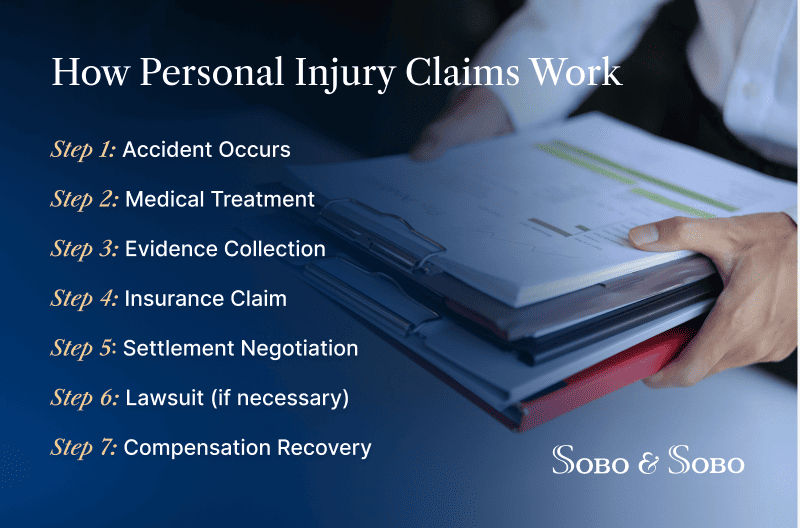
Leyenda: La mayoría de las reclamaciones por daños personales implican la recopilación de pruebas, las negociaciones con las aseguradoras y la indemnización por pérdidas económicas y personales.
¿Qué casos aceptan los abogados especializados en lesiones personales?
Los abogados especializados en lesiones personales suelen evaluar los casos teniendo en cuenta la lesión, las pruebas, la parte responsable, el seguro disponible y si es probable que una acción judicial mejore el resultado.
Casos relacionados con la negligencia
La negligencia es la base de la mayoría de las reclamaciones por daños personales.
Ejemplos:
- Conducción distraída
- Condiciones de inseguridad en los inmuebles
- Errores médicos
Casos relacionados con lesiones graves
Los abogados suelen ayudar a los clientes que se enfrentan a:
- Gastos médicos importantes
- Períodos de recuperación prolongados
- Discapacidades permanentes
- Reducción de la capacidad de generar ingresos
Casos relacionados con litigios en materia de seguros
Las compañías de seguros pueden impugnar la responsabilidad, los daños y perjuicios o la cobertura.
Un abogado puede intervenir cuando una aseguradora niega su responsabilidad, cuestiona el tratamiento médico, retrasa el pago u ofrece una indemnización inferior al valor real de la reclamación.
CTA: ¿Qué es un abogado especializado en lesiones personales? https://sobolaw.com/personal-injury/what-is-a-personal-injury-lawyer/
¿Cómo saber si tienes un caso de lesiones personales?
No todas las personas que sufren una lesión tienen automáticamente derecho a reclamar una indemnización. La cuestión clave suele ser si el daño se debió a la negligencia o a una conducta ilícita de otra persona.
Indicios de que pudo haber habido negligencia
Puede darse un caso de negligencia cuando:
- La otra parte actuó de forma imprudente
- Se ignoraron las normas de seguridad
- No se subsanaron las condiciones peligrosas
- Un error que se podía haber evitado causó un perjuicio
Pruebas que se suelen utilizar en las reclamaciones
Las pruebas suelen incluir:
- Historiales médicos
- Fotografías
- Declaraciones de los testigos
- Imágenes de las cámaras de vigilancia
- Informes de accidentes
Unas pruebas sólidas pueden ayudar a demostrar qué ocurrió, quién fue el responsable y cómo afectó la lesión a la vida de la persona.
¿Qué hay que llevar cuando se trata una reclamación por daños personales?
Si hablas con un abogado, lleva contigo cualquier documentación que ayude a explicar lo que ocurrió y cómo te ha afectado la lesión. Entre los documentos útiles pueden figurar informes del accidente, historiales médicos, fotos, vídeos, cartas de la aseguradora, nombres de testigos, facturas de reparación y mensajes de las aseguradoras u otras partes implicadas.
No es necesario que lo tengas todo listo antes de pedir ayuda. Un abogado puede explicarte qué información puede ser necesaria aún y qué pruebas debes conservar.
¿Cuánto tiempo tienes para presentar una reclamación por daños personales?
Los plazos varían en función de la legislación estatal y de las circunstancias del accidente. Las reclamaciones en las que estén implicadas entidades públicas, menores o determinados problemas médicos pueden regirse por normas diferentes.
Estatuto de limitaciones
El plazo de prescripción establece la fecha límite para presentar una demanda.
Si no respetas ese plazo, es posible que no puedas obtener una indemnización.
Por qué es importante actuar con rapidez
Actuar con rapidez puede ayudar a preservar las pruebas, localizar a los testigos, documentar las lesiones y evitar problemas evitables en la reclamación.
Si no estás seguro de si tienes derecho a reclamar, puede resultarte útil hablar con un abogado lo antes posible.
Cómo la asistencia jurídica puede reforzar una reclamación por daños personales
Un abogado especializado en lesiones personales puede ayudarte a organizar las pruebas, gestionar las comunicaciones con la aseguradora e identificar los daños y perjuicios que, de otro modo, podrían pasarse por alto.
Investigación del accidente
Un abogado puede:
- Recopilar pruebas
- Entrevistar a los testigos
- Revisar registros
- Consulta a expertos
Negociación con las compañías de seguros
Las compañías de seguros pueden impugnar la responsabilidad, el tratamiento médico, las necesidades de cuidados futuros, la pérdida de ingresos o la gravedad de la lesión.
Un abogado puede encargarse de esas comunicaciones y ayudar a evaluar si una oferta de acuerdo refleja el impacto total de la lesión.
Teniendo en cuenta todas las consecuencias de la lesión
Un abogado puede ayudarte a tener en cuenta:
- Gastos médicos actuales
- Necesidades futuras en materia de tratamiento
- Pérdida de ingresos
- Repercusiones a largo plazo
Ponte en contacto con Sobo & Sobo para una consulta gratuita y sin compromiso.
Preguntas frecuentes sobre los tipos de casos de daños personales
¿Cuáles son los tipos más habituales de casos de daños personales?
Entre los tipos más comunes de casos de daños personales se incluyen los accidentes de tráfico, los accidentes por resbalones y caídas, las demandas por negligencia médica, los accidentes laborales, los accidentes de peatones, las demandas por mordeduras de perro y los casos de responsabilidad por productos defectuosos.
¿Qué se considera una reclamación por daños personales?
Para presentar una reclamación por daños personales, por lo general es necesario que la lesión haya sido causada por la negligencia o la conducta ilícita de otra persona.
¿Qué tipos de indemnizaciones por daños y perjuicios se pueden reclamar?
La indemnización se calcula habitualmente en función de factores como los gastos médicos, el lucro cesante, el dolor y el sufrimiento, el daño moral y otros perjuicios, dependiendo de las circunstancias.
¿Qué se considera negligencia en un caso de daños personales?
Se produce negligencia cuando alguien no actúa con la diligencia debida y causa un perjuicio a otra persona.
¿Cómo funcionan las demandas por daños personales?
La mayoría de los casos de daños personales comienzan con una investigación y un proceso de reclamación al seguro. Algunos casos se resuelven mediante negociación, mientras que otros llegan a los tribunales.
¿Puedo presentar una demanda por daños morales?
En algunos tipos de casos de daños personales, es posible obtener una indemnización por daños morales como parte de una reclamación por daños personales.
¿Qué pruebas se necesitan en un caso de daños personales?
Los historiales médicos, las fotografías, las declaraciones de los testigos, los informes de accidentes y los dictámenes periciales se utilizan habitualmente para respaldar las reclamaciones en muchos tipos de casos de daños personales.
¿Cuándo debo acudir a un abogado especializado en lesiones personales?
A menudo resulta útil consultar con un abogado lo antes posible tras un accidente para preservar las pruebas y conocer tus opciones legales.
Habla con un abogado especializado en lesiones personales sobre tu caso
Si has sufrido lesiones a causa de la negligencia de otra persona, conocer tus opciones es un primer paso importante.
Una consulta gratuita puede ayudarte a comprender si tu reclamación es válida, qué indemnización podrías recibir y qué medidas podrías tomar para evitar cometer errores desde el principio en tu caso.
Llama al (855) 468-7626 o ponte en contacto con nosotros a través de nuestra página web para concertar hoy mismo tu consulta gratuita.