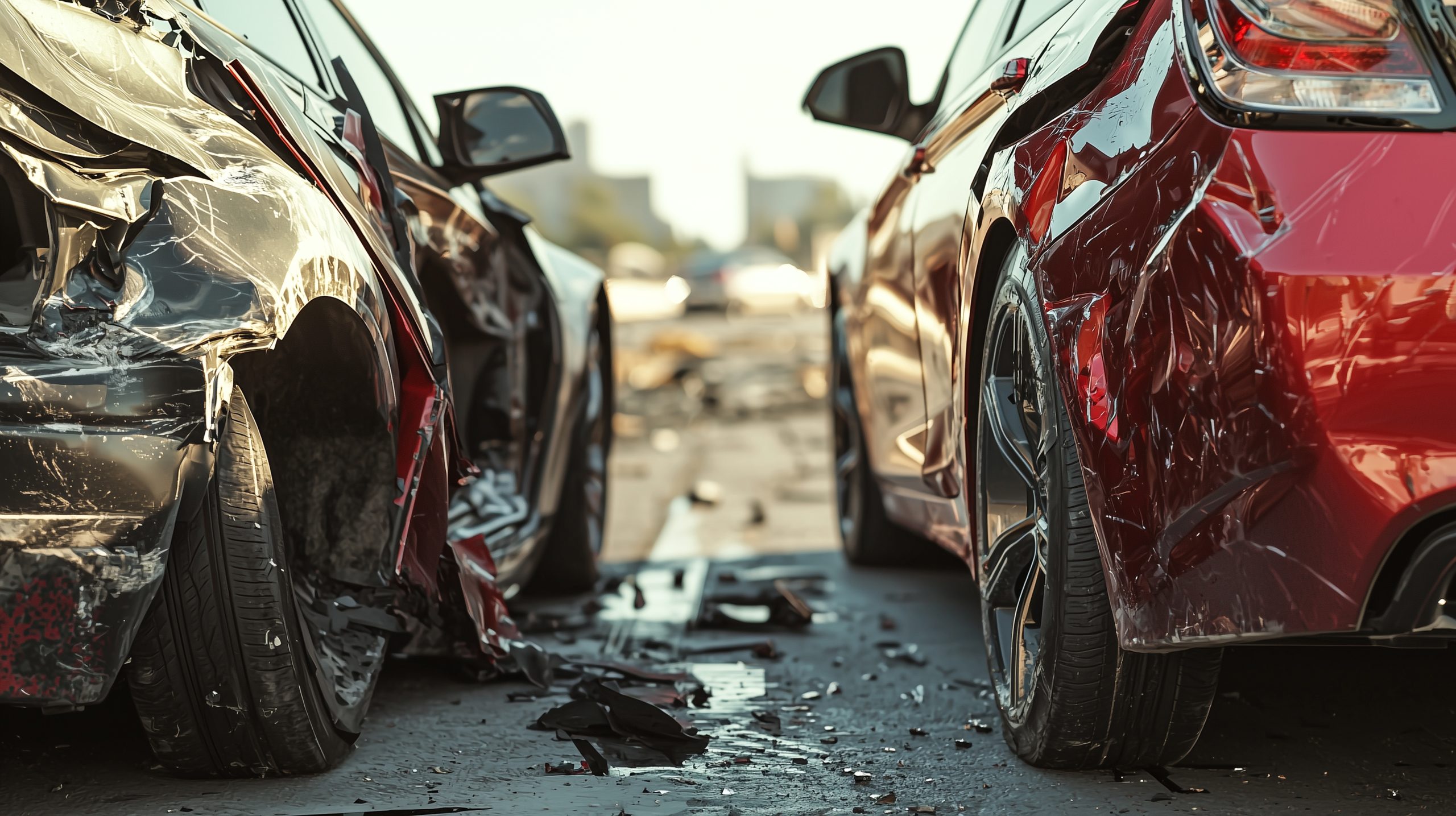
A sideswipe accident occurs when two vehicles traveling parallel to each other in the same or opposite directions make side-to-side contact. Unlike head-on collisions or rear-end crashes, a sideswipe often begins as a glancing blow—but it can escalate quickly into a severe accident if either driver loses control. These incidents frequently happen during lane changes, merges, or when drivers fail to maintain their lane.
A sideswipe can involve passenger cars, motorcycles, trucks, or buses, and while the initial point of contact may seem less dramatic than a direct impact, the chain reaction it sets off often leads to serious injuries, rollovers, or multi-vehicle pileups.
Sideswipe Accident Statistics
If you’re wondering just how common sideswipe accidents are—and how dangerous—they’re more prevalent than many drivers realize. According to the National Highway Traffic Safety Administration (NHTSA), sideswipe crashes account for over 9% of all traffic collisions in the United States annually. While not every sideswipe is fatal, these accidents contribute to tens of thousands of injuries and thousands of deaths each year.
Common Causes of Sideswipe Accidents (Data-Based Insights):
- Unsafe Lane Changes – Over 50% of sideswipe crashes occur when a driver fails to signal or check blind spots before moving into another lane.
- Distracted Driving – Mobile phone use, eating, or adjusting in-car systems account for an estimated 23% of sideswipe incidents.
- Highway Merges – Around 18% happen when vehicles attempt to enter or exit high-speed roads without proper yielding.
- Driving Under the Influence – Impaired drivers are far more likely to drift into other lanes.
- Drowsy Driving – Fatigue-related lane departures cause thousands of sideswipe collisions annually.
Most Common Injuries in Sideswipe Collisions:
Even though the initial contact point is lateral, the human body is vulnerable to sudden sideways forces. Victims frequently suffer:
- Whiplash and Neck Injuries – Rapid head movement during impact causes muscle, tendon, and ligament damage.
- Shoulder & Arm Trauma – Especially when the collision crushes the driver’s side.
- Spinal Injuries – Herniated discs and nerve compression are common in high-speed sideswipes.
- Traumatic Brain Injuries (TBI) – From hitting interior vehicle structures or secondary impacts.
- Fractures – Particularly ribs, arms, and pelvis from the side impact and subsequent vehicle spin.
The Insurance Institute for Highway Safety (IIHS) reports that sideswipe accidents involving large trucks or buses are 40% more likely to cause severe injuries than those involving only passenger cars, due to the significant weight and size disparity.
Most Common Causes of Sideswipe Accidents
When examining why sideswipe accidents happen, one thing is clear: the vast majority are preventable. Here’s what you need to know:
1. Improper Lane Changes
Failure to signal, check mirrors, or look over your shoulder before moving into another lane is a leading cause. Modern cars may have blind spot monitoring systems, but human error remains the number one contributor.
2. Distracted Driving
From smartphones to in-dash entertainment systems, distractions pull attention away from the road. A split-second lapse in focus can cause a driver to drift out of their lane without realizing it.
3. Speeding
Higher speeds reduce reaction time and increase the severity of an impact. Many sideswipe accidents happen on highways, where vehicles travel at 55–75 mph.
4. Road Rage & Aggressive Driving
Cutting off another driver or trying to “teach them a lesson” by veering toward them is not only reckless—it’s illegal and dangerous.
5. Adverse Weather Conditions
Rain, snow, and ice reduce tire traction, increasing the likelihood of vehicles sliding into adjacent lanes.
6. Fatigue
Drowsy drivers can unintentionally drift over lane markings, particularly during late-night or early-morning hours.
7. Merging Without Yielding
Entering a highway without properly timing your merge or exiting too abruptly can lead to a sideswipe, especially in high-density traffic areas.
Most Common Injuries Sustained in Sideswipe Collisions
While some people mistakenly believe that sideswipe accidents cause only “minor scrapes,” the reality is that the human body isn’t designed to absorb sudden, forceful impacts from the side. Even at lower speeds, the lateral jolt can cause serious harm—especially when combined with a loss of vehicle control or secondary collisions.
Top Injuries from Sideswipe Accidents:
- Whiplash & Neck Strain – Sudden jerking motions strain neck muscles, tendons, and ligaments. This can lead to chronic pain if untreated.
- Shoulder Dislocations & Fractures – Common in driver-side impacts when the door crushes inward.
- Spinal Injuries & Herniated Discs – The side-force impact compresses and twists the spine unnaturally.
- Traumatic Brain Injuries (TBI) – Direct head contact with windows, pillars, or airbags can cause concussions or more severe brain trauma.
- Rib & Chest Injuries – Including broken ribs, lung contusions, and internal bleeding.
- Pelvic & Hip Fractures – More common when the collision force is concentrated near the driver’s or passenger’s lower body area.
- Soft Tissue Damage – Bruising, torn ligaments, and muscle tears are frequent, often requiring physical therapy.
Quick Answer: Yes, sideswipe accidents can cause severe injuries—even at low speeds—due to the sideways motion and loss of control they often trigger. Always seek medical attention immediately after an accident, even if symptoms seem mild.
Who Is at Fault in a Sideswipe Accident?
Determining liability in a sideswipe accident often comes down to proving which driver left their lane or violated a traffic rule. In most cases, the driver who fails to maintain their lane is at fault, but there are exceptions.
Key Factors in Fault Determination:
- Police Reports: Officers note visible evidence like skid marks, damage location, and lane positions.
- Traffic Laws: Failing to yield during a lane change is typically a traffic violation and establishes fault.
- Witness Statements: Third-party accounts can be powerful in proving which vehicle moved improperly.
- Dashcam or Surveillance Footage: Objective video evidence can confirm lane departure.
Example Scenarios:
- A driver merges onto a highway without checking their blind spot and hits another car → Merging driver at fault.
- Two vehicles drift toward each other while distracted → Both may share fault under comparative negligence laws.
- A driver is forced to swerve due to another motorist’s sudden lane change → The initiating driver could be 100% at fault.
Qualifying for a Sideswipe Accident Case
You may qualify to file a personal injury lawsuit if:
- You were injured in the accident (medical records help prove this).
- Another party’s negligence caused or contributed to the crash.
- You suffered financial losses—medical bills, lost wages, or property damage.
Evidence That Strengthens a Case:
- Photographs of the accident scene and damage.
- Eyewitness testimony.
- Medical evaluations linking your injuries to the crash.
- Expert accident reconstruction reports.
Even if you think your injuries are “not that bad,” they may worsen over time. Consulting a lawyer early ensures you don’t miss the statute of limitations for your state.
Quick Answer: If you were injured in a sideswipe accident caused by another driver’s negligence, you likely qualify for a personal injury claim—regardless of whether the other driver admits fault.
What to Do After a Sideswipe Accident to Maximize Compensation
What you do immediately after a sideswipe accident can determine the outcome of your case. The goal is to preserve evidence, protect your health, and avoid mistakes that insurance companies exploit to lower payouts.
Step-by-Step Actions:
- Call 911 Immediately – Get police and medical responders on the scene.
- Document Everything – Take photos and videos of vehicles, road conditions, and any visible injuries.
- Get Witness Information – Collect names and contact details from anyone who saw the crash.
- Seek Medical Care Promptly – Even if you feel fine, hidden injuries like concussions or internal bleeding can appear later.
- Do Not Admit Fault – Stick to factual statements when speaking to police or insurance adjusters.
- Contact a Personal Injury Lawyer Early – The sooner your lawyer can begin gathering evidence, the stronger your case.
- Avoid Quick Settlement Offers – Early offers rarely cover the full extent of medical costs, lost wages, and pain and suffering.
Damages You Can Recover in a Sideswipe Accident Lawsuit
When you’re injured in a sideswipe collision caused by another driver, you have the right to pursue compensation for both financial and non-financial losses. These damages are meant to restore you to the position you were in before the accident—or as close as possible.
Types of Damages You Can Claim:
- Medical Expenses – Ambulance fees, ER visits, hospital stays, surgery, rehabilitation, and ongoing therapy.
- Lost Wages – Income lost while recovering, plus reduced earning capacity for long-term injuries.
- Property Damage – Vehicle repair or replacement, plus damaged personal items.
- Pain and Suffering – Compensation for physical pain, emotional distress, and reduced quality of life.
- Loss of Consortium – Impact on relationships with spouses or family members.
- Future Medical Care Costs – For chronic injuries requiring long-term treatment.
Quick Answer: You can recover both economic (financial) and non-economic (emotional and physical suffering) damages in a sideswipe accident lawsuit.
Suing for a Sideswipe Accident Without Insurance
If you were driving without insurance during a sideswipe accident, you may still be able to recover compensation—but the process becomes more complicated.
Key Points:
- In no-fault states like New York, your own insurance typically covers medical expenses, but without coverage, you may need to file against the at-fault driver directly.
- In at-fault states, you can still sue the responsible driver if you can prove their negligence, but they may counterclaim for damages if you contributed to the crash.
- Some states have “No Pay, No Play” laws, which limit non-economic damages for uninsured drivers.
Tip: Even if you were uninsured, consult with a personal injury attorney immediately—your right to compensation depends heavily on your state’s laws and accident details.
How Sideswipe Accident Settlements Are Calculated
Settlement amounts vary widely, but several consistent factors determine the final payout:
1. Injury Severity – More serious or permanent injuries lead to higher settlements.
2. Medical Costs – Both past and anticipated future expenses are considered.
3. Lost Income – Time missed from work and future earning potential play a big role.
4. Pain & Suffering Multiplier – Insurers often multiply economic damages by a factor (1.5–5) to estimate non-economic losses.
5. Comparative Negligence – If you were partially at fault, your award could be reduced proportionally.
6. Insurance Policy Limits – The at-fault driver’s coverage cap can influence settlement offers.
Quick Answer: Sideswipe accident settlements are based on medical costs, lost income, pain and suffering, and the percentage of fault assigned to each driver.
Recent Examples of Sideswipe Accident Cases Won by Sobo & Sobo
The following sideswipe accident lawsuits and settlements are are for illustrative purposes only, and do not guarantee similar outcomes.
- $475,000 – New York City, NY
A rideshare passenger suffered spinal injuries after a distracted driver sideswiped their vehicle on the FDR Drive. Settlement covered surgery, rehab, and lost income. - $325,000 – Trenton, NJ
Delivery driver sustained a broken pelvis when another vehicle drifted into their lane on Route 1 during icy conditions. - $290,000 – Chicago, IL
A commuter’s car was sideswiped by a speeding SUV merging without signaling. Multiple fractures required months of physical therapy. - $410,000 – Milwaukee, WI
Motorcyclist forced off the road by a sideswipe from a pickup truck, resulting in traumatic brain injury and long-term cognitive impairment. - $360,000 – Hartford, CT
Minivan carrying a family was sideswiped by a semi-truck on I-84. Case included damages for emotional distress for children involved. - $150,000 – Columbus, OH
Low-speed downtown sideswipe caused severe whiplash and nerve damage to an office worker on their way to work.
Contact a Sideswipe Accident Lawyer Near You
If you’ve been injured in a sideswipe accident, you don’t have to face the insurance companies alone. At Sobo & Sobo, we’ve spent over 50 years fighting for accident victims and have built a reputation for winning—98% of our sideswipe accident cases end in favorable results for our clients.
We understand the physical pain, financial stress, and emotional toll these accidents cause. That’s why we offer free consultations to help you understand the value of your case, your legal rights, and your best path toward maximum compensation.
📞 Call us today at 855-468-7626 or schedule an appointment online to speak directly with an experienced sideswipe accident attorney. We’ll review your case in detail, explain your legal options, and fight aggressively to secure the compensation you deserve.
Don’t wait—the sooner you contact us, the stronger your case will be. Evidence fades, witnesses move on, and deadlines for filing a claim can pass quickly. Call now, and let us put our decades of experience to work for you.
Sideswipe Accident FAQ – Quick Answers for Google Search
Q: What is a sideswipe accident?
A: A sideswipe accident happens when two vehicles traveling side-by-side collide along their sides, often during lane changes, merges, or drifting out of lanes.
Q: Who is at fault in a sideswipe accident?
A: Usually the driver who leaves their lane without yielding or signaling, but liability can be shared depending on the circumstances.
Q: Can you get injured in a sideswipe accident?
A: Yes—common injuries include whiplash, broken bones, spinal injuries, and head trauma.
Q: What should I do right after a sideswipe accident?
A: Call 911, document the scene, get witness information, seek medical care, and contact a personal injury attorney immediately.
Q: How much can I get for a sideswipe accident settlement?
A: Settlements vary based on injury severity, medical costs, lost income, pain and suffering, and fault percentage. Awards can range from tens of thousands to several hundred thousand dollars.
Q: Can I sue for a sideswipe accident without insurance?
A: Yes, in many cases—but state laws vary. An attorney can explain your rights and options.
Q: How long do I have to file a sideswipe accident lawsuit?
A: It depends on your state’s statute of limitations—often 2–3 years from the date of the accident.