After a sideswipe, focus first on reaching safety, getting medical care, and saving evidence when it is safe to do so. You do not need to understand the entire claims process right away. Here is what to do after a sideswipe accident in 2026, in a practical order that puts safety before paperwork.
- What to do after a sideswipe accident: reach safety, assess injuries, document evidence, exchange information, notify insurers, and review your rights.
- Call 911 for injuries or immediate danger; never enter moving traffic to photograph vehicle damage.
- Side-panel damage alone does not establish which driver crossed a lane line.
- Sobo & Sobo represents injured people pursuing personal injury claims; legal help does not replace emergency medical care.
If you were injured, Sobo & Sobo provides personal injury representation on a no-win-no-pay basis. Sobo & Sobo helps injured people pursue personal injury claims after a crash. You can start by explaining what happened and asking which next steps apply to you.
Why This Matters
A sideswipe happens when vehicles make contact along their sides, often during a lane change, merge, or passing maneuver. The contact can also cause a driver to lose control or strike another object. Take the collision seriously even if the visible damage is limited to scraped doors.
It is understandable to feel unsure about what comes next. Focus first on staying safe and getting medical care. Questions about fault can be reviewed afterward. A damaged passenger door does not, by itself, prove which driver left a lane.
This 2026 guide separates emergency actions from claim-related decisions. Follow instructions from emergency responders, and have a lawyer check the rules that apply where your crash occurred.
What Makes the Best Response to a Sideswipe Accident?
Use these criteria to decide what deserves your attention first:
- Immediate safety: Does the action reduce exposure to moving traffic or another hazard?
- Medical urgency: Does the action respond to an injury or concerning symptom without delay?
- Evidence preservation: Does the action save information that can disappear or be overwritten?
- Reporting accuracy: Does the action create a factual record without guessing about fault?
- Claim protection: Does the action help you understand obligations before making an irreversible decision?
You do not have to finish each task before starting the next. A passenger can call for help while you follow emergency instructions. Evidence collection must wait when it interferes with safety or treatment.
The 6 Best Actions at a Glance
| Priority | Action | Best for | Main benefit | Key limitation |
|---|---|---|---|---|
| 1 | Reach safety and request help | Immediate danger | Reduces exposure to another collision | Moving a vehicle is not always safe |
| 2 | Get appropriate medical care | Injuries and concerning symptoms | Connects symptoms with professional evaluation | An examination does not determine legal fault |
| 3 | Preserve crash evidence | Disputed lane changes | Records positions, damage, and surrounding conditions | Photographs rarely tell the entire story |
| 4 | Exchange information and keep report details | Identifying drivers and insurers | Creates a usable contact and incident record | Driver statements can conflict |
| 5 | Notify the relevant insurers | Opening the claim process | Establishes notice and a claim reference | Reporting is not the same as accepting a settlement |
| 6 | Review your rights before settling | Injuries or disputed responsibility | Helps assess evidence, coverage, and deadlines | Legal advice does not guarantee recovery |
1. Reach Safety: Best for Preventing Another Collision
Best for: anyone still exposed to moving traffic or an unsafe crash scene.
Check yourself and your passengers for immediate danger. Call 911 if someone is injured, traffic presents an immediate threat, or another emergency exists. Tell the dispatcher your location, what happened, and whether anyone needs medical assistance.
If your vehicle can be driven safely, follow local requirements and emergency responders’ instructions about moving it to a safer location. Do not remain in an active lane just to photograph the scene. If you suspect a serious injury, follow the dispatcher’s instructions rather than moving an injured person unnecessarily.
Reaching safety — pros:
- Puts people ahead of vehicle damage.
- Helps emergency responders understand the situation.
- Reduces the need to stand beside moving traffic.
Reaching safety — limitations:
- A damaged vehicle might not be safe to drive.
- A shoulder or roadside area is not automatically safe.
Use hazard lights when appropriate. Avoid arguments about who caused the crash while you are exposed to traffic; that discussion does not belong in the roadway.
Your next step: reach safety and get help before taking photographs or discussing fault.
2. Get Medical Care: Best for Protecting Your Health
Best for: anyone with pain, an injury, or symptoms after the collision.
Tell emergency personnel about symptoms such as head pain, dizziness, neck pain, numbness, breathing trouble, or confusion. Seek emergency care for severe or concerning symptoms. Do not rely on the appearance of your vehicle to decide whether you need medical attention.
During an examination, describe how the collision happened, what you felt, and when symptoms began. Give an accurate medical history, including relevant preexisting conditions. Follow treatment instructions and tell your clinician about new or worsening symptoms.
Medical care — pros:
- Lets a medical professional assess your symptoms and recommend treatment.
- Creates a record of reported symptoms and clinical findings.
- Gives you instructions for follow-up care.
Medical care — limitations:
- Medical records do not independently establish who caused the collision.
- An initial visit does not replace recommended follow-up.
Keep discharge instructions, bills, appointment records, and treatment recommendations together. If an injury affects work or ordinary activities, record the actual limitation without exaggerating it.
Your next step: tell a medical professional about your symptoms, even if the vehicle damage looks minor.
3. Preserve Evidence: Best for a Disputed Lane Change
Best for: crashes where drivers disagree about merging, passing, or lane position.
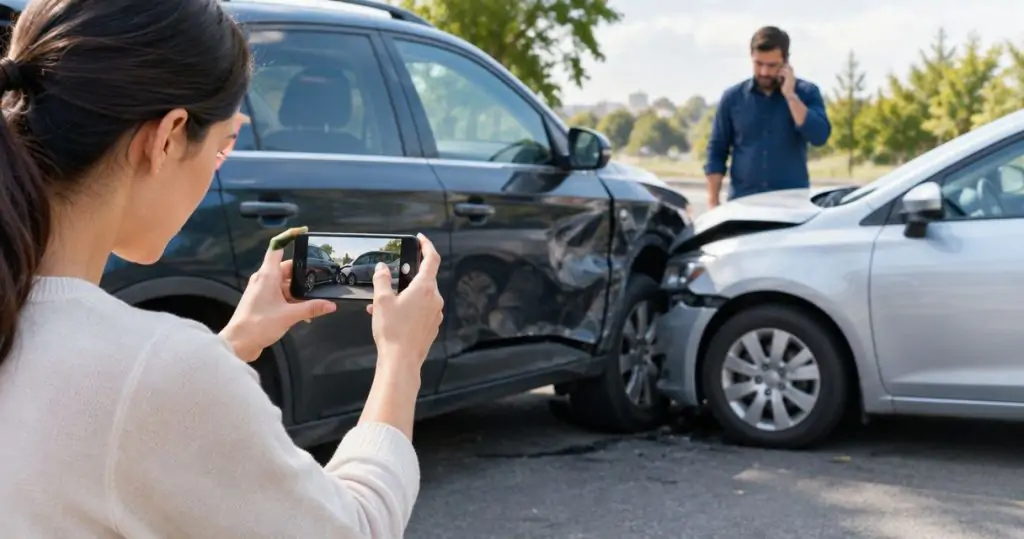
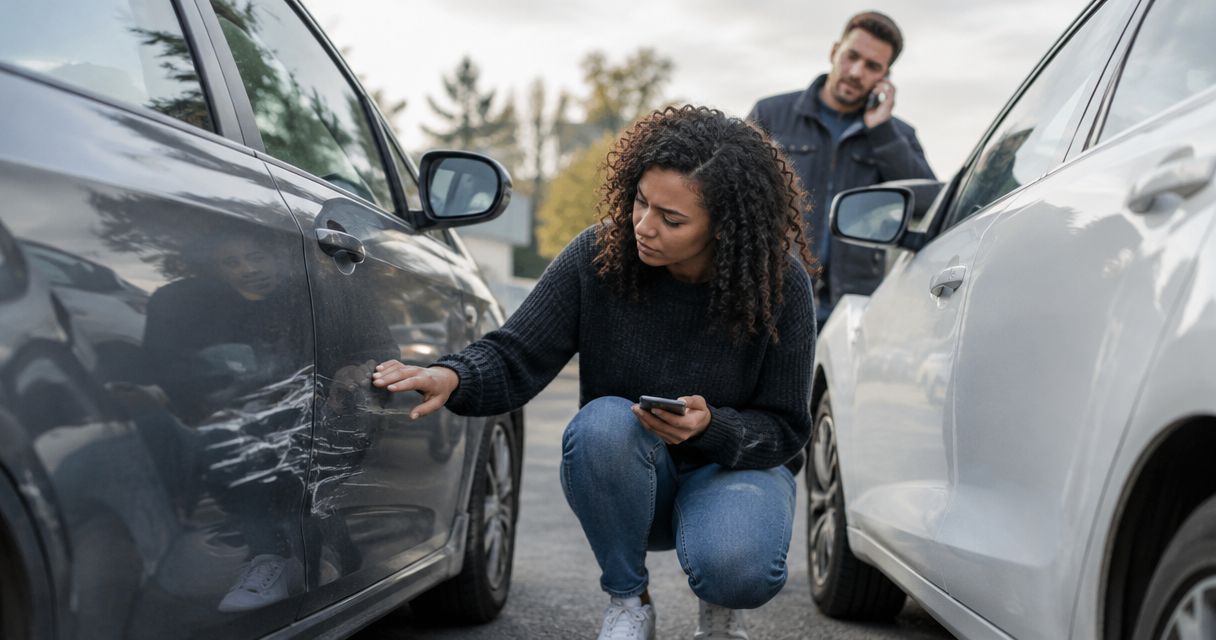
Once you are safe, photograph the scene without stepping into traffic. Take three types of photographs: wide views of the roadway, views showing each vehicle’s damage, and close-ups of relevant details. Include lane markings, signs, debris, and vehicle positions when you can do so safely.
Save original dashcam files before they are overwritten. If witnesses are willing, request their names and contact information. Identify nearby businesses or properties with cameras, but do not trespass or assume footage will be retained.
Evidence preservation — pros:
- Records details you might later forget.
- Helps distinguish visible damage from assumptions about fault.
- Gives your insurer or lawyer evidence to review.
Evidence preservation — limitations:
- A photograph cannot show every movement before impact.
- Collecting evidence is never a reason to delay needed care.
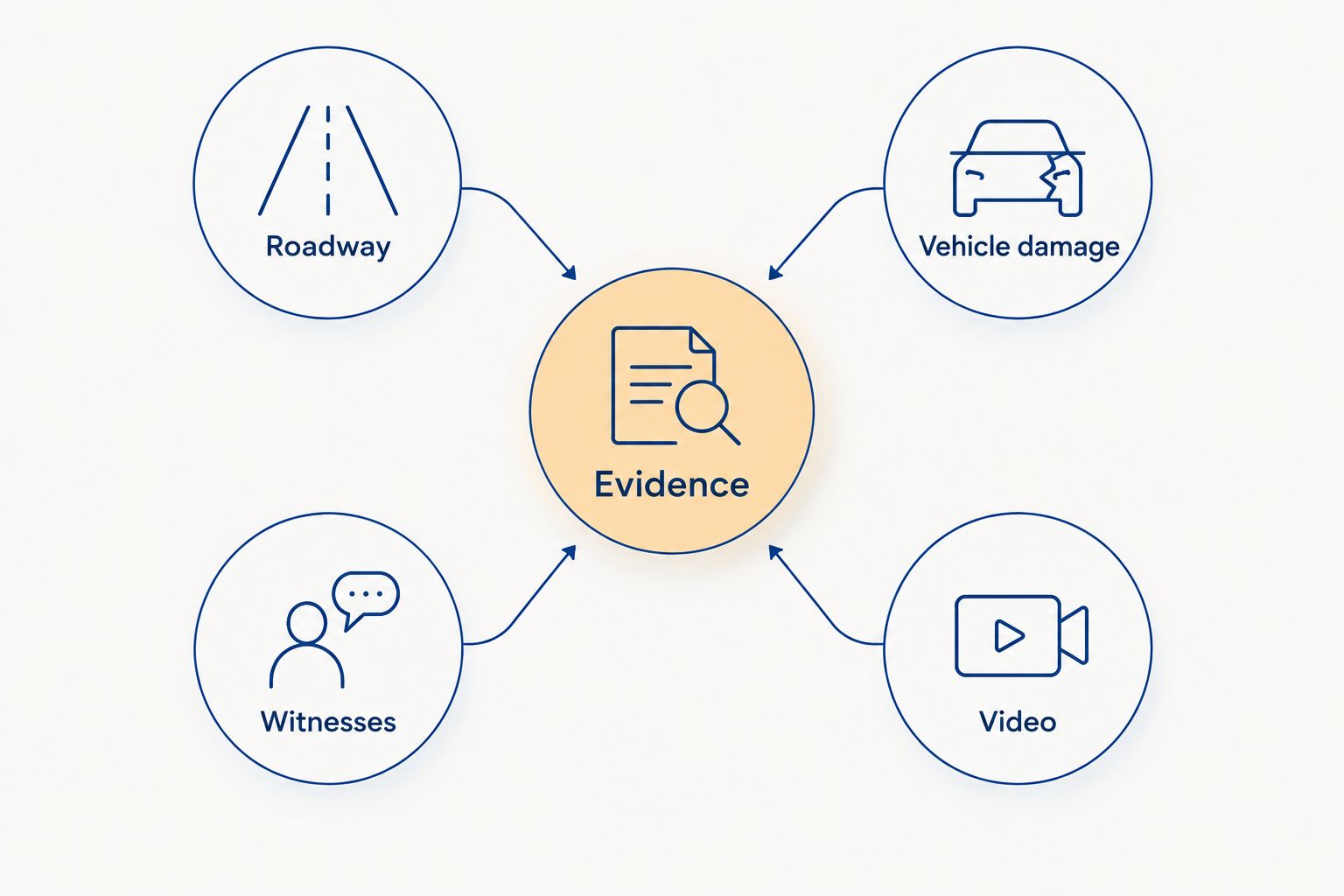
What to Preserve
- Roadway: lane markings, merge areas, signs, and visible conditions.
- Vehicle damage: contact areas and damage to both vehicles, when safely accessible.
- Witnesses: names, contact details, and what they personally observed.
- Video: original dashcam files and the locations of possible cameras.
These evidence categories complement one another. A close-up of scraped paint has a different purpose from a wide view showing where a merge lane ends.
Write down what you remember while it is fresh. Separate direct observations from conclusions: seeing a vehicle cross a line is different from assuming it happened because of where the damage appears.
Your next step: save the original evidence you can safely collect; ask for help with anything you cannot.
4. Exchange Information: Best for Building an Accurate Record
Best for: identifying the people, vehicles, and insurers involved.
Exchange the information required by the applicable law, including driver and insurance details. Record license plate information and obtain witness contact details when available. If police respond, ask how to obtain the incident or crash report and retain the reference information provided.
Describe what you observed without estimating facts you do not know. Do not guess at another driver’s speed or agree to a version of events simply to end an uncomfortable conversation. If someone becomes threatening, prioritize safety and request police assistance.
Information exchange — pros:
- Helps identify the correct driver and insurer.
- Gives you a reference for follow-up reporting.
- Reduces reliance on an informal verbal agreement.
Information exchange — limitations:
- Insurance information does not establish coverage for every loss.
- A report can contain errors or conflicting accounts.
Even if police attend the scene, you may still need to submit separate reports. Check which requirements apply, and review the police report for factual errors when it becomes available. Use the proper correction process rather than altering a document yourself.
Your next step: exchange contact and insurance details, and describe only what you know. It is fine to say you are unsure.
5. Notify Insurers: Best for Starting the Claim Process
Best for: meeting applicable notice duties and documenting your claim.
Review your policy and notify your insurer as required. Provide accurate information about the crash, injuries you know about, and vehicle damage. Save the claim number, adjuster’s contact details, and copies of correspondence.
For a crash in 2026, do not assume that one state’s reporting or insurance rules apply in another. Required notices, available benefits, and filing deadlines depend on the location, policy, and circumstances. Check the actual requirements rather than relying on a general deadline from an online article.
Insurer notification — pros:
- Creates a documented claim record.
- Helps identify requested documents and next steps.
- Gives you a contact for questions about applicable coverage.
Insurer notification — limitations:
- Opening a claim does not guarantee payment.
- You may need advice to understand whether you must comply with an adjuster’s request.
Distinguish your own insurer from another driver’s insurer. Your policy can impose cooperation requirements; obtain advice before refusing a request or providing a recorded statement when you do not understand your duties. Never guess, conceal facts, or describe an injury as resolved when it is not.
Your next step: report the crash as your policy requires, keep copies, and ask for an explanation of any request you do not understand.
6. Review Your Rights: Best Before Accepting an Injury Settlement
Best for: injured people facing disputed fault, ongoing treatment, or a proposed release.
By signing a settlement release, you can give up your right to pursue the claims it covers. Before signing, understand how it addresses your medical care, work loss, ongoing symptoms, and other supported losses. An agreement covering vehicle repairs may be separate from an injury settlement. Read each document to understand which claims it resolves.
A personal injury lawyer can review responsibility, evidence, insurance issues, and applicable deadlines. Sobo & Sobo represents injured individuals pursuing claims across New York, New Jersey, Connecticut, Pennsylvania, Illinois, Wisconsin, Rhode Island and Ohio on a no-win-no-pay basis.
Legal review — pros:
- Helps identify legal issues beyond the repair estimate.
- Gives you advice about releases and disputed responsibility.
- Helps organize evidence and supported losses.
Legal review — limitations:
- No lawyer can guarantee a particular outcome.
- Representation does not remove the need for truthful information and supporting records.
Ask what the representation agreement covers and how fees and case expenses are handled. Do not assume that a short description of a fee arrangement answers every question about costs.
Your next step: ask a personal injury lawyer to explain the release before you settle. You do not need to interpret it alone.
Review Your Injury Claim Options
Not sure what comes next? Contact Sobo & Sobo to discuss your sideswipe injury claim and ask about no-win-no-pay representation.
How These Actions Are Ranked
The steps are ordered by urgency: address immediate danger first, then medical needs, evidence, reporting, and settlement decisions. Each action serves a different purpose, and none replaces the others.
The same priority applies throughout this 2026 guide: do not sacrifice health or safety to strengthen a claim. Preserve what you safely can, and ask responders or qualified professionals for help with the rest.
Which Action Should You Choose First?
If you are still at the scene, start with safety and injuries. If everyone is safe and medical needs are addressed, preserve evidence and complete the required information exchange.
If you are reading this after leaving the scene, focus on unfinished tasks. Save existing photos and video, write down your recollection, arrange appropriate care, and check reporting obligations. You do not need to recreate an unsafe scene to document what happened.
FAQ
What’s the first thing to do after a sideswipe accident?
Get out of immediate danger and assess injuries. Call 911 for injuries or an immediate threat, and follow dispatcher instructions before collecting evidence.
Who is at fault in a sideswipe accident?
Fault depends on the drivers’ actions, the evidence, and applicable law. Vehicle damage alone does not establish which driver crossed a lane line or failed to yield.
Should I move my car after a sideswipe?
Move the vehicle only when doing so is safe and consistent with local requirements and responder instructions. Do not remain in moving traffic just to preserve the vehicle’s original position for a photograph.
Do I need medical care if the damage looks minor?
Visible vehicle damage does not determine whether you need medical care. Seek appropriate evaluation for symptoms and emergency care for severe or concerning symptoms.
What evidence should I save after a sideswipe?
Save roadway photographs, vehicle damage photographs, original video files, witness details, and crash-report information. Collect evidence only when doing so does not interfere with safety or medical care.
Should I give the other driver’s insurer a recorded statement?
Understand your obligations before providing a recorded statement to another driver’s insurer. Distinguish that request from your own insurer’s policy requirements, and get legal advice if you are unsure how to respond.
Can Sobo & Sobo help with a sideswipe injury claim?
Sobo & Sobo provides personal injury representation for injured individuals pursuing claims across New York, New Jersey, Connecticut, Pennsylvania, Illinois, Wisconsin, and Ohio. The firm works on a no-win-no-pay basis; review the representation agreement for the terms.
One Last Thing
Save the original video, not just a screenshot or a clip sent through a messaging app. Keep footage from before and after the impact. It can help show each vehicle’s lane position and movements.
For your 2026 crash records, keep an untouched original and a separate working copy. Keep the evidence unchanged so it accurately reflects what happened.
Related Guides
- Steps to take after a car accident in New York City
- Questions to ask a construction accident lawyer in New York