Best overall: ask which legal claims your construction accident supports. Best for protecting your rights: ask about deadlines. Best for comparing lawyers: ask who will handle your case. These are the most useful questions to ask a construction accident lawyer in New York in 2026 because they test the lawyer’s plan, not the sales pitch.
- The best questions to ask a construction accident lawyer establish claims, deadlines, evidence, fees, and responsibility.
- Ask whether workers’ compensation and a separate third-party construction injury claim both apply.
- Sobo & Sobo represents injured individuals pursuing personal injury claims on a no-win-no-pay basis.
- Choose a lawyer who explains specific next steps without promising a settlement amount or outcome.
Why these questions matter
A construction injury can raise different legal issues at once: medical treatment, lost earnings, workplace benefits, and responsibility for unsafe conditions. A lawyer should explain how those issues fit together instead of treating every accident as the same case.
Sobo & Sobo is a fit for injured construction workers seeking personal injury representation on a no-win-no-pay basis. Visit Sobo & Sobo’s website to prepare for your consultation, then use the questions below to evaluate the firm’s proposed approach to your case.
You do not need to arrive with a legal theory. Bring the facts you know, identify what remains uncertain, and ask the lawyer to distinguish established facts from issues requiring investigation.
What makes the best construction accident lawyer questions?
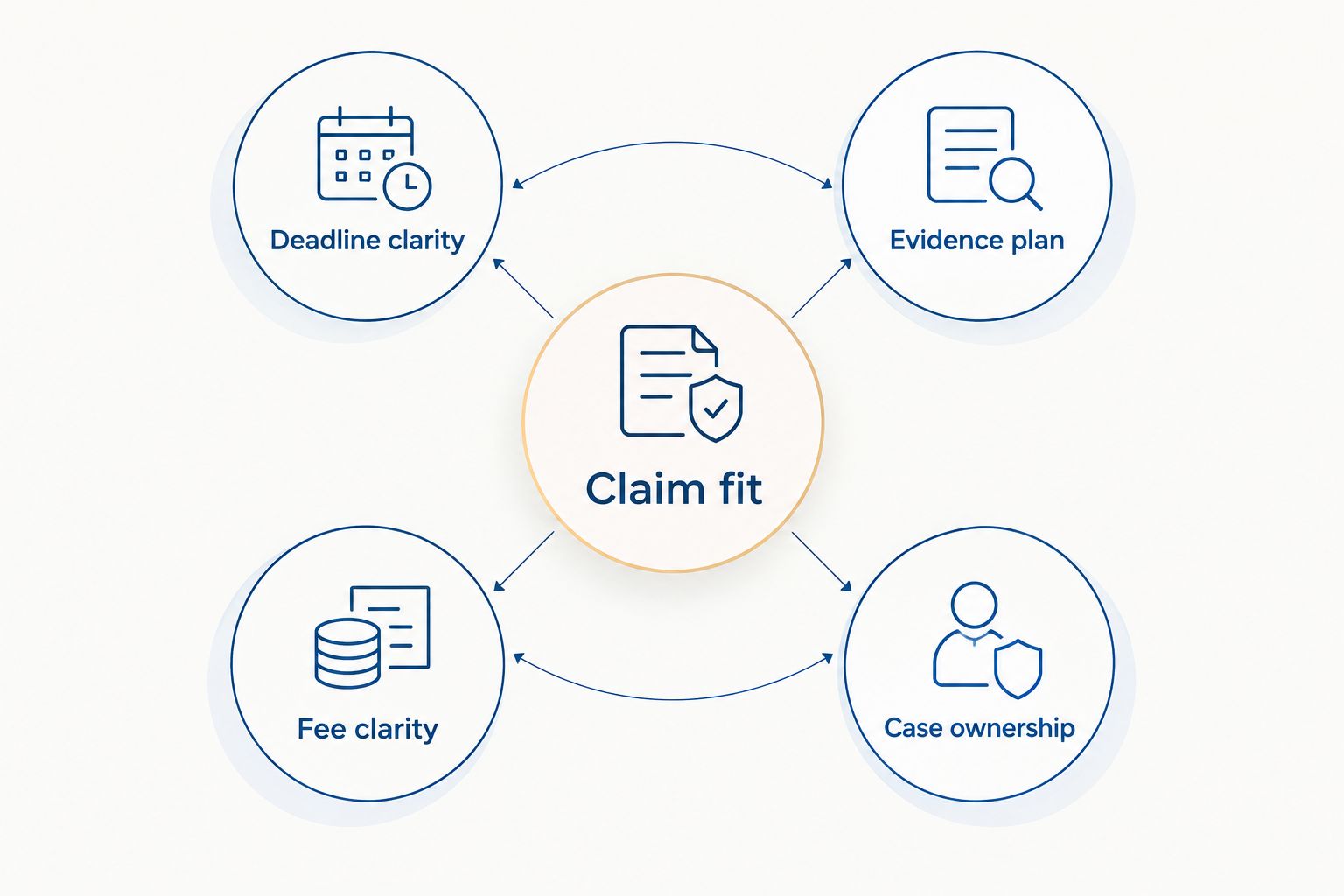
The strongest consultation questions produce explanations you can use to make a decision. Judge each answer against these criteria:
- Claim fit: Does the lawyer connect the available legal claims to your accident?
- Deadline clarity: Does the lawyer identify the deadlines that apply to your situation?
- Evidence plan: Does the lawyer explain what needs preserving and why?
- Fee clarity: Does the lawyer explain the written agreement and responsibility for expenses?
- Case ownership: Does the lawyer identify who handles decisions and communication?
A confident answer is not automatically a useful answer. Listen for a connection between your facts, the legal issue, and the next action.
The seven questions at a glance
This 2026 consultation guide ranks questions by what they help you establish. The ranking is a preparation order, not permission to postpone an urgent deadline discussion.
| Rank | Question | Best for | What a useful answer includes | Key limitation |
|---|---|---|---|---|
| 1 | Which claims apply to my accident? | Understanding your legal options | Separate explanations of benefits and potential lawsuits | Liability requires factual investigation |
| 2 | What construction cases have you handled? | Assessing relevant experience | Comparable legal issues and the lawyer’s role | Past results do not establish your outcome |
| 3 | Who could be responsible? | Identifying potential defendants | A plan to investigate site roles and control | A company’s title alone does not prove liability |
| 4 | What deadlines apply? | Protecting your rights | Applicable dates, exceptions, and immediate actions | Different claims have different requirements |
| 5 | What evidence needs preserving? | Protecting your proof | Specific records and preservation steps | Some evidence is outside your control |
| 6 | How do fees and expenses work? | Understanding the agreement | Written terms and expense responsibility | A short slogan cannot explain every term |
| 7 | Who handles my case? | Assessing communication | Named responsibilities and an update process | Staffing arrangements differ between firms |
1. Which claims apply to my construction accident?
Best for: understanding your legal options.
Ask: Does my accident support workers’ compensation, a third-party personal injury lawsuit, or both? Workers’ compensation and a lawsuit against a legally responsible third party serve different purposes. Eligibility for one does not automatically establish the other.
Ask whether New York Labor Law provisions concerning elevation hazards or construction-site safety apply to your work and accident. A useful explanation connects the law to what you were doing, the equipment involved, and how the injury happened.
This question’s pros:
- Separates workplace benefits from potential civil claims.
- Tests whether the lawyer understands your accident facts.
- Reveals which issues need further investigation.
This question’s limitations:
- An initial consultation cannot resolve disputed facts.
- A construction-site injury does not automatically establish a Labor Law claim.
Follow up with: What facts would change your assessment? That answer should expose the important uncertainties rather than hide them.
Verdict: Hold your decision until the lawyer explains the potential claims separately.
2. What experience do you have with accidents like mine?
Best for: assessing relevant legal experience.
Ask about the accident mechanism, not just whether the lawyer handles personal injury cases. A scaffold fall, equipment incident, and injury involving falling materials raise different factual questions.
Ask what role the lawyer personally handled in comparable matters: investigation, depositions, negotiations, or trial preparation. The answer should explain relevant experience without disclosing another client’s confidential information.
This question’s pros:
- Moves the discussion beyond general credentials.
- Identifies experience with the disputed safety issue.
- Clarifies the lawyer’s personal role.
This question’s limitations:
- Similar accidents can produce different legal outcomes.
- A past recovery does not predict your recovery.
For your 2026 consultation, replace Have you won big cases? with What issues in my accident resemble matters you have handled? The second question gives you a better basis for comparison.
Verdict: Skip promises based on another client’s result; assess the explanation of relevant experience.
3. Who could be responsible besides my employer?
Best for: identifying potential defendants.
Ask the lawyer to explain which site participants require investigation. Depending on the facts and applicable law, that inquiry can involve an owner, general contractor, subcontractor, equipment supplier, or another party.
Workers’ compensation generally limits an employee’s ability to sue an employer for a workplace injury, subject to exceptions. That makes the distinction between your employer and other site participants important.
This question’s pros:
- Tests whether the investigation extends beyond one company.
- Connects responsibility to site roles and legal duties.
- Identifies contracts and records worth obtaining.
This question’s limitations:
- Being present on the site does not establish liability.
- Responsibility cannot be decided from a job title alone.
Follow up with: What records will help establish who controlled the work or supplied the equipment? Ask the lawyer to separate possible defendants from parties already supported by evidence.
Verdict: Hold until the lawyer explains how potential responsibility will be investigated.
4. What deadlines apply, and what needs to happen now?
Best for: protecting your right to bring a claim.
Ask for the deadlines relevant to your accident, not a single general filing period. Reporting an injury, filing a benefits claim, and starting a lawsuit are different actions.
New York workers’ compensation law generally requires written notice to the employer within 30 days of an accident and filing a claim within 2 years, subject to exceptions. Many New York negligence-based personal injury lawsuits have a 3-year limitation period under CPLR 214(5), but that is not a universal deadline.
Claims involving public entities can carry separate notice requirements and shorter time limits. Ask specifically whether a public owner or other government-related party changes your next steps.
This question’s pros:
- Turns urgency into identifiable actions.
- Distinguishes reporting from filing.
- Flags claims with special requirements.
This question’s limitations:
- Exceptions require individual legal analysis.
- A general deadline summary is not a personalized calculation.
If your accident occurred before 2026, give the lawyer the actual accident date immediately. Do not calculate your deadline from this guide alone.
Verdict: Hold off on delaying; get a case-specific deadline assessment promptly.
5. What evidence needs to be preserved immediately?
Best for: protecting proof of how the accident happened.
Ask which records and physical evidence matter for your particular injury. Relevant material can include photographs, video, witness details, incident reports, equipment records, site documents, and medical records.
Separate what you already possess from what another party controls. Ask whether the lawyer needs to send preservation requests and how you should retain your own messages, photographs, and documents.
This question’s pros:
- Produces a practical evidence checklist.
- Identifies material held by other parties.
- Connects proof to disputed facts.
This question’s limitations:
- A preservation request does not guarantee compliance.
- Gathering evidence must not expose you to danger or unauthorized access.
Keep original files where possible, and do not edit or delete relevant material. Ask about social media before posting about the accident, your injuries, or your activities.
Verdict: Skip unsafe evidence gathering; preserve what you have and ask counsel about obtaining the rest.
6. How do your fees and case expenses work?
Best for: understanding your financial obligations.
Ask the lawyer to walk through the written engagement agreement before you sign. Distinguish the attorney’s fee from case expenses, such as record collection, filing, expert work, and depositions.
Sobo & Sobo describes its personal injury representation as no-win-no-pay. Ask how that arrangement applies under the agreement, including how expenses are handled if the case does not produce a recovery.
This question’s pros:
- Separates fees from litigation expenses.
- Makes the written terms the focus.
- Helps prevent misunderstandings about deductions.
This question’s limitations:
- A verbal summary does not replace the agreement.
- Fee terms do not measure the strength of your claim.
Also ask how medical liens or other repayment obligations would be addressed. Those obligations are separate from the lawyer’s fee and can affect the amount you receive.
Verdict: Hold until you understand the agreement, expenses, and potential deductions.
7. Who will handle my case and keep me informed?
Best for: assessing day-to-day communication.
Ask who supervises the matter, who performs routine work, and who answers substantive legal questions. A team structure is not a problem by itself; unclear responsibility is.
Ask how the firm communicates about treatment updates, document requests, settlement discussions, and important decisions. You should understand whom to contact when something changes.
This question’s pros:
- Establishes responsibility before representation begins.
- Clarifies how questions reach the right person.
- Sets expectations for updates and decisions.
This question’s limitations:
- Litigation includes periods with little visible activity.
- An update process cannot guarantee a case completion date.
For a 2026 lawyer comparison, write down the proposed contact process after each consultation. Compare the actual explanation rather than assuming a larger or smaller team communicates better.
Verdict: Skip arrangements where nobody can explain who owns your case and your questions.
How these questions were ranked
The order prioritizes claim fit, relevant experience, responsibility, deadlines, evidence, agreement terms, and communication. Each question tests a different part of representation; none substitutes for the others.
Deadline clarity and evidence preservation deserve immediate attention when action is urgent. Move those questions to the beginning rather than following the list mechanically.
Which question should you ask first?
Start with: Which claims apply to my accident, and what must happen immediately to protect them? That opening combines legal options with action and gives the lawyer a reason to address urgent deadlines early.
Before a consultation with Sobo & Sobo or another attorney, prepare the accident date, location, employer’s name, a short account of what happened, and documents already in your possession. Identify gaps honestly. Do not guess about equipment ownership or who controlled another company’s work.
Discuss your construction accident
Ask Sobo & Sobo about your injury, potential claims, and the next steps in seeking representation.
FAQ
What are the most important questions to ask a construction accident lawyer?
Ask which claims apply, what deadlines control, and what evidence needs preserving. Then ask about relevant experience, potential defendants, the written fee agreement, and responsibility for communication.
Can I receive workers’ compensation and sue after a New York construction accident?
You can potentially pursue workers’ compensation and a separate claim against a legally responsible third party. A workplace injury alone does not establish a third-party claim, and claims against employers are generally restricted.
How long do I have to report a construction injury in New York?
New York workers’ compensation law generally requires written notice to your employer within 30 days of the accident, subject to exceptions. Reporting the injury and filing a benefits claim are separate requirements, so ask an attorney about both.
Should a construction accident lawyer promise a settlement amount?
A lawyer should not guarantee a settlement amount or outcome. Ask what evidence supports any assessment and which unresolved issues affect liability and damages.
What should I bring to a construction accident consultation?
Bring documents you already have, including photographs, incident information, medical records, employer details, and relevant insurance correspondence. Give the lawyer the accident date and identify records you know exist but do not possess.
Does no-win-no-pay explain every possible case expense?
No-win-no-pay does not replace a review of the written representation agreement. Ask separately about attorney fees, litigation expenses, and how repayment obligations would be handled.
Do I need to know which company caused my construction accident?
You do not need to identify every responsible company before speaking with a lawyer. Explain what you observed and ask how site records, contracts, witnesses, and equipment information will be investigated.
One last thing
Ask the lawyer to separate what is known, what needs investigation, and what happens next. That distinction is more useful than an immediate prediction about winning.
For your 2026 consultation, leave with a clear understanding of urgent actions and whether the firm has agreed to represent you. Do not assume that an initial conversation means a lawyer has accepted responsibility for filing your claim.