
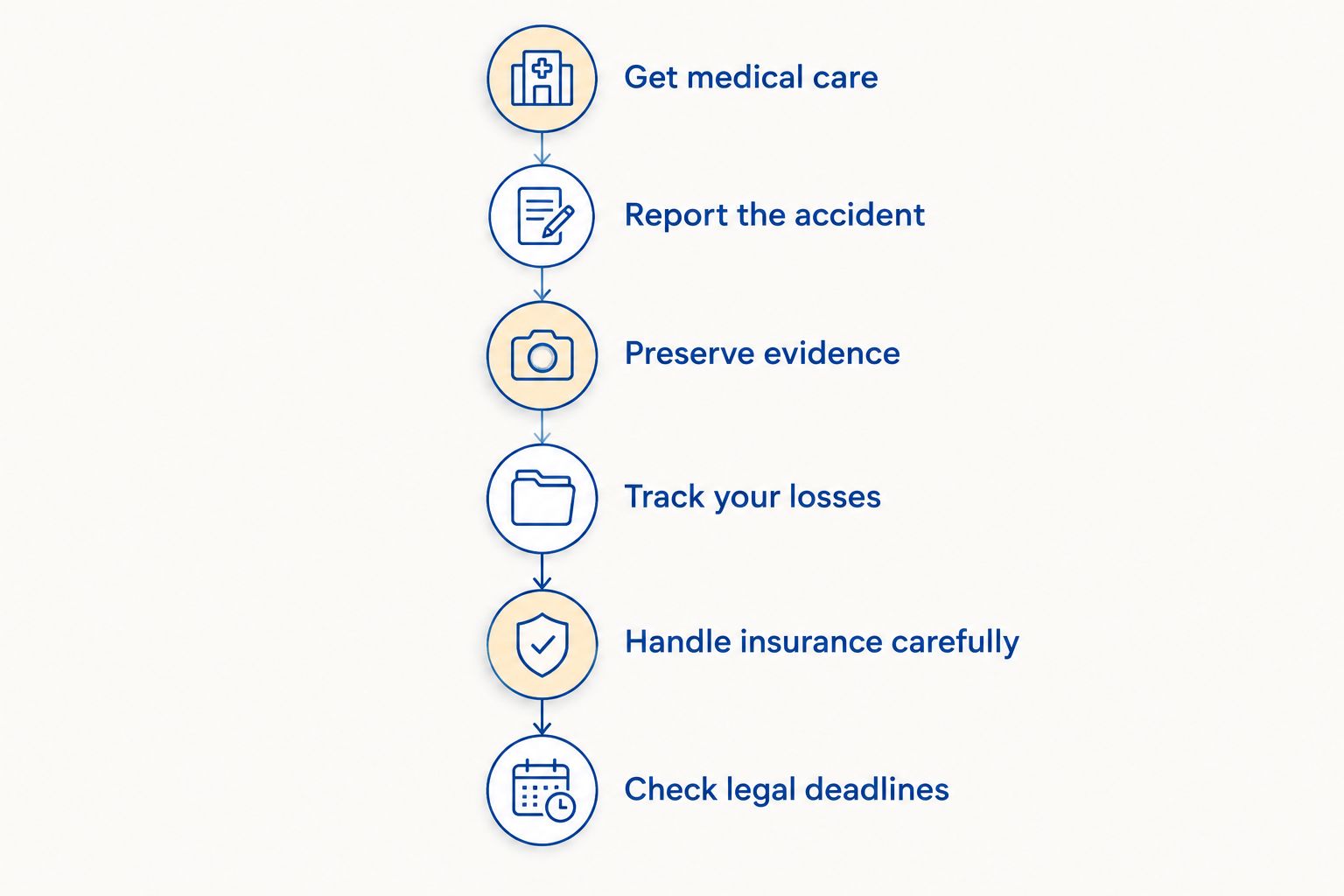
The most important steps to take after a personal injury in New Jersey are to get medical care, report the accident, preserve evidence, track your losses, handle insurance carefully, and check legal deadlines. This 2026 guide explains six practical steps. Address medical needs first, save evidence when it is safe, and ask about deadlines before making settlement decisions.
- The first steps to take after a personal injury in New Jersey are medical care, accident reporting, and evidence preservation.
- New Jersey generally gives injured adults two years to file a personal injury lawsuit; exceptions change deadlines.
- Claims against New Jersey public entities generally require a notice of claim within 90 days.
- Sobo & Sobo represents injured people pursuing New Jersey personal injury claims on a no-win-no-pay basis.
Sobo & Sobo handles personal injury claims in New Jersey on a no-win-no-pay basis. Sobo & Sobo provides personal injury representation for injured people in New Jersey. If you are unsure what to do next, contact the firm to discuss your accident and ask which steps apply to you.
Why This Matters
After an accident, it can be hard to know where to start. Put your health first, then save the information that helps explain what happened. Medical care, reporting, and an injury claim are separate parts of the process, and you can ask for help with each one.
For a New Jersey accident in 2026, the right next move depends on the injury, the location, and who was involved. A collision, a store fall, and an injury on public property do not follow identical reporting or insurance rules. Use this sequence to organize your response, not to diagnose an injury or calculate a filing deadline yourself.
What Makes the Best Post-Accident Response
The best response is the one that addresses urgent needs without creating avoidable gaps in your records. Judge each action against these criteria:
- Medical priority: Does it get you appropriate care without delaying treatment for paperwork?
- Accurate reporting: Does it document what you know without guessing about fault or injuries?
- Evidence preservation: Does it protect information that can disappear, change, or be overwritten?
- Loss documentation: Does it connect expenses, missed work, and daily limitations to supporting records?
- Deadline protection: Does it identify the rules that apply before you sign documents or miss a filing requirement?
The steps below help you address urgent needs while keeping track of the tasks that remain. Someone you trust can help take photographs or report the accident while you receive treatment.
The Six Steps at a Glance
| Step | Best for | Main benefit | Key limitation |
|---|---|---|---|
| Get medical care | Protecting your health | Creates a record of symptoms and treatment | Medical records alone do not establish legal fault |
| Report the accident | Creating an initial account | Identifies the event and the people involved | Reports can contain errors or omissions |
| Preserve evidence | Protecting facts about the scene | Records conditions before they change | Gathering evidence must not expose you to danger |
| Track your losses | Documenting the injury's impact | Organizes bills, missed work, and limitations | A journal does not replace independent records |
| Handle insurance carefully | Avoiding preventable claim mistakes | Keeps communications and requests organized | Policy duties and insurer roles differ |
| Check legal deadlines | Protecting your right to pursue a claim | Identifies notices, filing dates, and representation needs | General deadlines do not resolve every case |
1. Get Medical Care: Best for Protecting Your Health
Best for: Anyone with an injury or symptoms after an accident. Get out of immediate danger if you can do so safely. Call 911 for an emergency and follow the instructions of emergency responders.
Do not stay at the scene to collect evidence when you need urgent treatment. If someone else can safely photograph the area or collect witness details, ask that person to help. Your health takes priority over building a claim.
Tell the treating clinician how the accident happened, where you hurt, and when symptoms began. Describe changes accurately rather than trying to diagnose yourself. Follow treatment instructions, and contact your provider if symptoms worsen or you cannot follow the treatment plan.
Medical Care Benefits
- Addresses injuries and directs follow-up care.
- Records the symptoms you report and the treatment you receive.
- Provides instructions about activity, work, and recovery.
Medical Care Limits
- Treatment records do not automatically prove another person was negligent.
- An initial examination does not replace recommended follow-up care.
Keep discharge instructions and appointment information together. If a provider restricts your work or physical activity, retain the written instructions and share them with the appropriate person at work.
Your next step: get the medical care you need and follow your provider's instructions. An insurance decision should not delay urgent care.
2. Report the Accident: Best for Creating an Initial Account
Best for: Establishing when and where the accident happened and who was involved. Report the event through the appropriate channel: police for a collision when required, property management for a premises incident, or your employer for a workplace injury.
Give facts you personally know. Explain what you saw and experienced without guessing about speed, distance, or another person's intentions. If you do not know an answer, say so.
Ask how to obtain the report and record any incident or reference number. For a business or property incident, identify the person who received your report. Keep a copy of any written account you submit.
Accident Reporting Benefits
- Creates an initial record of the event.
- Helps identify responding personnel and involved parties.
- Gives you a reference for later records requests.
Accident Reporting Limits
- A report can leave out witnesses, injuries, or important details.
- Reporting an accident does not itself file a lawsuit or satisfy every legal notice requirement.
Review the report when you receive it. If basic facts are wrong, ask the issuing organization about its correction process and keep supporting documentation. Do not alter an official report yourself.
Your next step: report what happened, keep a copy, and ask whether any separate insurance or legal notices are needed.
3. Preserve Evidence: Best for Protecting Facts Before They Change
Best for: Documenting the scene, the hazard, and the people who witnessed the accident. Photograph the overall area and relevant details only when doing so is safe. Useful subjects include vehicle positions, damaged property, walking surfaces, warning signs, and visible injuries.
Save original files rather than keeping only cropped or edited versions. Record witness names and contact information, and note nearby businesses or cameras that might have recorded the event. A lawyer can assess what preservation requests are appropriate.
Evidence Preservation Benefits
- Captures conditions before repairs, cleanup, or weather changes them.
- Helps identify witnesses and possible recordings.
- Gives an attorney material to evaluate responsibility.
Evidence Preservation Limits
- Photographs show only the angle and moment captured.
- Entering restricted areas or returning to traffic creates unnecessary danger.
Keep damaged items when practical and safe. Before repairing, discarding, or surrendering something important, ask how to document its condition and whether it needs to be preserved. Never interfere with emergency work to collect evidence.
Your next step: save what you can safely collect and ask your lawyer about records held by other people.
4. Track Your Losses: Best for Documenting the Injury's Impact
Best for: Connecting your expenses and limitations to supporting records. Create a folder for treatment records, bills, receipts, insurance correspondence, and work-related documents. Keep unpaid bills as well as payment records so you can distinguish what was charged from what you paid.
Write brief, dated notes about symptoms and daily limitations. Describe specific tasks that changed, such as driving, lifting groceries, sleeping, or doing your usual work. Accuracy matters more than dramatic language.
Loss Tracking Benefits
- Keeps documents accessible when your lawyer or insurer requests them.
- Supports a clearer account of missed work and treatment expenses.
- Records daily limitations that are easy to forget later.
Loss Tracking Limits
- Personal notes do not replace medical records or employer documentation.
- Keeping a receipt does not establish that an expense is legally recoverable.
Ask your employer for records showing missed time, changes in duties, and relevant earnings information. Save treatment-related receipts without assuming every item belongs in a claim. Your lawyer can explain which losses the applicable law recognizes.
For a claim arising in 2026, keep documents unchanged and record when you received or submitted them. A clear timeline helps separate accident-related records from unrelated expenses or earlier medical issues.
Your next step: keep bills, receipts, and missed-work records together. A simple folder is enough to get started.
5. Handle Insurance Carefully: Best for Avoiding Preventable Mistakes
Best for: Managing claim communications without confusing your duties with another insurer's requests. Notify your own insurer as your policy requires. Keep a record of the claim number, the representative's name, and the documents requested.
Your own insurer and another party's insurer have different roles. Before giving a recorded statement, signing a broad medical authorization, or accepting a settlement, understand who is asking and what the document does. Do not ignore requests from your own insurer; ask for clarification and legal advice when needed.
Careful Insurance Handling Benefits
- Keeps deadlines and document requests organized.
- Helps prevent inaccurate statements made under pressure.
- Gives you time to understand a proposed release.
Insurance Handling Limits
- Avoiding all communication can conflict with your policy obligations.
- An adjuster's explanation is not independent legal advice.
New Jersey auto coverage can involve personal injury protection, commonly called PIP. Your policy and the circumstances of the accident determine which coverage applies. Ask your insurer and lawyer which benefits and reporting requirements apply.
Sobo & Sobo represents injured individuals pursuing New Jersey claims. Discuss proposed statements and settlement documents with your lawyer before committing to terms you do not understand.
Your next step: respond to required insurance requests and ask for an explanation before signing anything unfamiliar.
6. Check Legal Deadlines: Best for Protecting Your Claim
Best for: Identifying filing requirements before time runs out. New Jersey generally gives an injured adult two years to bring a personal injury lawsuit under N.J.S.A. 2A:14-2. Exceptions and the type of claim can change the deadline, so have a lawyer check which rule applies to your situation.
For 2026 claims involving a New Jersey public entity or public employee, the Tort Claims Act generally requires a notice of claim within 90 days under N.J.S.A. 59:8-8. A notice of claim formally informs the public entity that you intend to seek compensation. It is separate from a lawsuit, and a routine incident report does not replace it.
Early Legal Review Benefits
- Identifies potentially responsible parties and applicable deadlines.
- Separates insurance reporting duties from legal filing requirements.
- Helps address evidence preservation and settlement questions.
Early Legal Review Limits
- Hiring an attorney does not guarantee compensation.
- A general online guide cannot determine every deadline or exception.
Tell the attorney if the accident involved government property, a public vehicle, your employment, or a child. Bring available reports, photographs, medical information, and correspondence. Do not postpone the conversation because your file is incomplete.
Sobo & Sobo handles personal injury representation on a no-win-no-pay basis. Contact the firm with the information you have, even if some records are missing. Before hiring a lawyer, review the written fee agreement and ask how legal fees and case expenses are handled.
Your next step: ask about deadlines while treatment continues, so you know what needs attention and when.
How to Use This Sequence
Start with medical care, then save evidence and check reporting and filing deadlines. Some actions happen together: someone can report the accident while you receive care, and a lawyer can review deadlines while treatment continues.
Use this sequence: get medical care, report the accident, preserve evidence, track your losses, handle insurance carefully, and check legal deadlines. Complete what you safely can, and ask for help with the rest.
Which Step Should You Take Right Now?
If you need medical attention, start there. If you are already receiving care, protect evidence and check whether a reporting or legal deadline needs immediate attention. Do not assume that an open insurance claim means every filing requirement is covered.
For a New Jersey injury in 2026, keep copies of reports, requests, and responses in one place, with the date of each clearly recorded. That makes it easier to see what is complete and what still needs action.
FAQ
What are the first steps to take after a personal injury in New Jersey?
Get appropriate medical care, report the accident, and preserve evidence when safe. Then track your losses, manage insurance communications, and check legal deadlines.
How long do I have to file a personal injury lawsuit in New Jersey?
New Jersey generally allows injured adults two years to file a personal injury lawsuit under N.J.S.A. 2A:14-2. Exceptions and different claim types affect deadlines, so have an attorney review your circumstances promptly.
What if I was injured on government property in New Jersey?
A claim involving a New Jersey public entity generally requires a notice of claim within 90 days under N.J.S.A. 59:8-8. Government-property cases require prompt legal review because notice requirements differ from ordinary accident reporting.
Should I give the insurance company a recorded statement?
Understand which insurer is asking and what your policy requires before giving a recorded statement. Your own insurer’s cooperation requirements differ from requests made by another party’s insurer.
What evidence should I save after an accident?
Save original photographs, witness contact details, reports, medical records, bills, and relevant correspondence. Preserve damaged items when practical and safe, and ask a lawyer about evidence that needs a preservation request.
Can I settle before my medical treatment is finished?
Do not sign a settlement release without understanding its effect on your claim and future treatment expenses. Ask your lawyer to explain what claims the agreement releases and how unresolved medical issues affect the decision.
Does Sobo & Sobo handle personal injury claims in New Jersey?
Yes. Sobo & Sobo represents injured individuals pursuing personal injury claims in New Jersey on a no-win-no-pay basis. Review the written agreement for the treatment of legal fees and case expenses.
One Last Thing
An incident report and a legal notice of claim are different documents. Reporting an injury to a public facility does not mean you have satisfied New Jersey's Tort Claims Act notice requirements. Tell your attorney exactly who received your report and provide a copy.
This guide provides general legal information, not advice about your specific case. The circumstances of your accident and the applicable law determine what to do next.
Related Guides
These guides address New York accidents, not New Jersey filing rules:
- Questions to ask a construction accident lawyer in New York
- Steps to take after a car accident in New York City