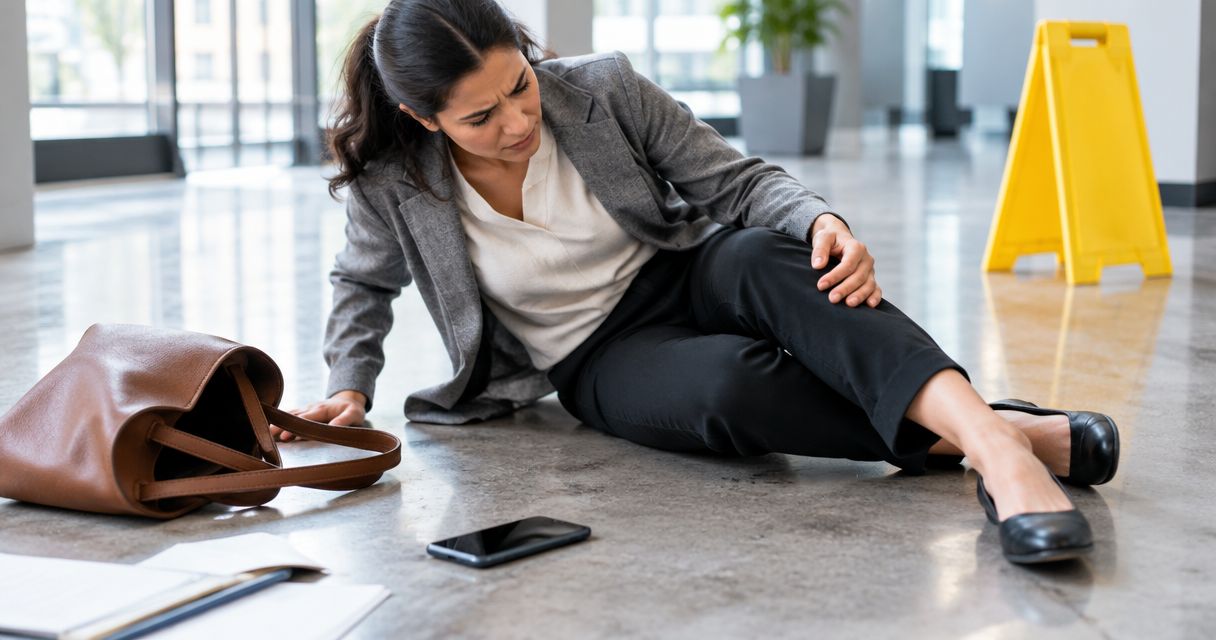
Start with photos or video of the hazard when it is safe, medical records documenting your injuries, and contact details for witnesses. You do not have to build the whole case yourself. The strongest evidence to collect after a slip and fall in 2026 helps explain what caused the fall, how you were injured, and how the injury affected you.
- The best evidence to collect after a slip and fall starts with original photos and video of the hazard.
- Medical records connect reported symptoms, examination findings, and treatment to your accident timeline.
- Witness details and incident reports help document what happened beyond your own account.
- Sobo & Sobo represents injured individuals pursuing personal injury claims on a no-win-no-pay basis.
Why This Matters
A wet floor can dry. A loose mat can be moved. Your injuries need attention first, but evidence about the condition that caused the fall deserves prompt attention too.
Sobo & Sobo represents injured people pursuing slip-and-fall claims on a no-win-no-pay basis. Contact Sobo & Sobo to discuss your fall and the records you have. The firm represents injured individuals across New York, New Jersey, Connecticut, Pennsylvania, Illinois, Wisconsin, Rhode Island and Ohio.
This 2026 guide ranks evidence by what it helps establish, not by how dramatic it looks. A close-up of a bruise documents an injury; a wider photograph showing the spill, aisle, and nearby warning sign answers different questions. You need both kinds of information.
What Makes the Best Slip-and-Fall Evidence?
Prioritize evidence that answers a specific question and remains useful after conditions change:
- Connection to the fall: Does it show the hazard, your movement, or the resulting injury?
- Timing: Does it establish when the condition, symptoms, or report existed?
- Context: Does it show the surrounding area rather than an isolated detail?
- Independent support: Does another person, recording, or business record support the account?
- Original condition: Can you preserve the unedited file, document, or physical item?
Collecting evidence does not mean proving the entire claim yourself. It means keeping the underlying facts available for a lawyer to evaluate.
Slip-and-Fall Evidence at a Glance
Use this 2026 checklist to cover 6 evidence categories. The order prioritizes conditions that can change quickly; it does not put photography ahead of necessary medical care.
| Rank and evidence | Best for | Standout value | Key limitation |
|---|---|---|---|
| 1. Scene photos and video | Showing the hazard and surroundings | Preserves a visual record before conditions change | Does not necessarily show how long the hazard existed |
| 2. Medical records | Documenting injury and treatment | Records symptoms, findings, and care | Does not establish the property owner’s fault on its own |
| 3. Witness details and accounts | Supporting what happened independently | Identifies people with firsthand observations | Witnesses can observe only part of the event |
| 4. Incident reports | Establishing that the fall was reported | Creates a record of the notification | The report can contain errors or incomplete details |
| 5. Surveillance and maintenance records | Investigating timing and prior knowledge | Can document events before the fall | Access and preservation require prompt attention |
| 6. Shoes, clothing, and loss records | Preserving physical evidence and financial effects | Retains items and documents connected to the claim | These materials do not replace evidence of the hazard |
1. Scene Photos and Video: Best Evidence for Showing the Hazard
Photograph the condition you believe caused the fall, if you can do so safely. Include close views and wider views showing its location, nearby entrances, lighting, floor transitions, and warning signs—or the surrounding area where you did not see a sign.
Keep your original files. Cropping an image for convenience should not mean deleting the wider original that preserves context.
Scene photos and video pros:
- Show the hazard’s appearance near the time of the fall.
- Preserve its position relative to surrounding features.
- Record details that become difficult to describe later.
Scene photos and video cons:
- A still image does not necessarily establish when a hazard first appeared.
- A narrow angle can leave important surrounding conditions out of view.
Best for: Recording the scene before it changes because of cleaning, repairs, or normal activity.
Do not step back onto a dangerous surface to recreate the accident. If you cannot safely take photographs, ask someone else to document the area without disturbing it.
Your next step: save the original scene files, even if the photographs are imperfect. They can still contain useful details.
2. Medical Records: Best Evidence for Documenting Injury and Treatment
Medical records document what you reported, what a clinician observed, and what treatment followed. Accurately describe how you fell and when each symptom began, including any that developed after you left the property.
Keep discharge instructions, referrals, prescriptions, and follow-up records together. A complete treatment history is more useful than an isolated bill with no explanation of the care.
Medical records pros:
- Record symptoms and examination findings.
- Establish dates of evaluation and treatment.
- Document care instructions and reported functional limitations.
Medical records cons:
- They generally do not establish whether the property owner acted negligently.
- An incomplete history can leave the accident timeline unclear.
Best for: Connecting the reported fall with documented injuries and treatment.
Tell clinicians about relevant earlier injuries rather than trying to hide them. Accuracy matters more than making the medical history sound simple. Seek care based on your health needs, not a checklist’s position in this ranking.
Your next step: keep treatment records alongside your bills so your lawyer can see what care you received and when.
3. Witness Details: Best Evidence for an Independent Account
Ask people who saw the fall or the condition for their names and contact details. Find out what each person actually observed: the fall itself, a spill beforehand, a cleanup afterward, or your condition immediately afterward.
These are different observations. Keep them separate instead of describing every person nearby as an eyewitness to the accident.
Witness details pros:
- Identify people with firsthand knowledge beyond your own account.
- Help clarify the sequence of events.
- Preserve a way to follow up after everyone leaves.
Witness details cons:
- A witness can miss important parts of the event.
- Memory is not a substitute for an available original recording.
Best for: Supporting facts that someone personally saw or heard.
Do not coach witnesses or ask them to agree that the property owner was at fault. Write down their words accurately, identify who provided the account, and ask your lawyer to assess legal responsibility.
Your next step: save each witness’s contact details and account of what they observed. You do not need to ask them to decide fault.
4. Incident Reports: Best Evidence That the Fall Was Reported
Notify the appropriate property representative when you can safely do so. Give the location, approximate time, condition involved, and a factual description of what happened; ask how to obtain a copy of the report.
A business’s report and your personal notes are not interchangeable. Preserve both, and identify any disagreement rather than assuming the business record captures everything correctly.
Incident report pros:
- Records that you notified the business or property representative about the fall.
- Identifies staff or managers involved afterward.
- Can record the location and condition described at the time.
Incident report cons:
- The person completing it might not have witnessed the fall.
- Its wording can be incomplete or inaccurate.
Best for: Establishing a record of your report and the immediate response.
Read any statement presented as your account before signing it. Request corrections to factual errors, and distinguish an accident report from a release or settlement document. Do not assume every document handed to you serves the same purpose.
Your next step: request a copy of the incident report, keep your request, and ask about correcting any factual errors.
5. Surveillance and Maintenance Records: Best Evidence for Timing
Surveillance footage can show the fall, activity beforehand, or the response afterward. Inspection logs, cleaning records, repair requests, and earlier complaints can help a lawyer investigate what the responsible parties knew and when.
Identify cameras and tell your lawyer about them promptly. A request for relevant records should identify the location and event clearly; do not assume footage will remain available indefinitely.
Surveillance and maintenance records pros:
- Can show events before and after the fall.
- Help investigate inspection, cleaning, or repair activity.
- Can support or challenge competing accounts of the timeline.
Surveillance and maintenance records cons:
- A camera might not cover the relevant area.
- You might not receive requested records directly without legal assistance.
Best for: Investigating how the condition developed and whether the property owner had a chance to fix it.
Do not enter restricted areas or access systems yourself. Note visible camera locations and the names of people who discussed recordings or maintenance, then pass those details to counsel.
Your next step: tell your lawyer promptly about cameras or records that might help, and keep copies of preservation requests.
6. Shoes, Clothing, and Loss Records: Best Evidence for Physical Effects
Keep the shoes and clothing you wore, and photograph their condition before altering anything. Ask your lawyer how to store potentially relevant items safely, especially if they are wet, contaminated, or damaged.
Keep receipts, treatment-related expenses, employment records, and communications about missed work together. Preserve the underlying documents rather than relying only on a running total.
Physical items and loss records pros:
- Preserve what you were wearing when the fall happened.
- Document visible damage or material on an item.
- Support a review of expenses and work-related losses.
Physical items and loss records cons:
- Cleaning, repair, or disposal changes the item’s original condition.
- A receipt alone does not establish that an expense is legally recoverable.
Best for: Supporting physical details and documenting the accident’s financial effects.
Avoid throwing away damaged shoes because they seem unimportant. Ask your lawyer which expenses relate to the accident rather than assuming every later cost belongs in the claim.
Your next step: keep relevant shoes, clothing, receipts, and work records, and ask your lawyer how to store physical items safely.
How This Evidence Is Ranked
The ranking favors evidence that preserves the scene, documents injury, adds independent support, and clarifies timing. These categories work together; none automatically establishes liability or guarantees a recovery.
For a 2026 slip-and-fall claim, relevant records matter more than the number of documents you collect. Keep original records that help explain the accident, your injuries, and your losses accurately.
Preserve Your Evidence Without Creating New Problems
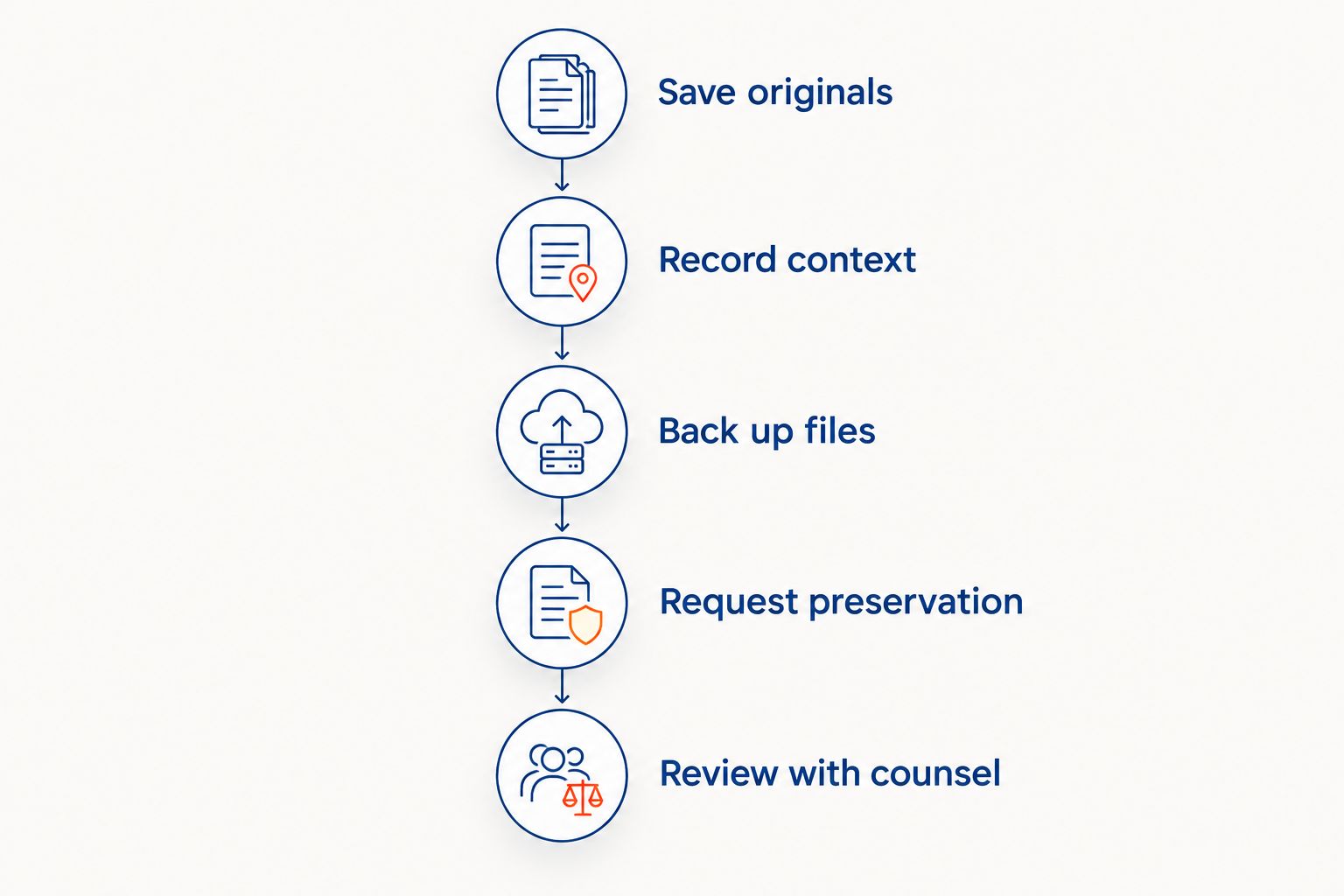
Once immediate medical needs are addressed, organize what you have. Use a simple sequence so you can distinguish original evidence from later notes and explain where each item came from.
- Save originals: Keep original photographs, videos, messages, and documents without overwriting them.
- Record context: Write down who created each item, where it came from, and what it shows.
- Back up files: Keep 2 separate copies of digital evidence in different locations so losing one device does not mean losing your records.
- Request preservation: Tell your lawyer about footage and business records that need attention.
- Review with counsel: Identify missing information and questions about deadlines or access.
Keep 1 factual timeline in your own words. Separate what you personally remember from what another person later told you, and date any additions rather than silently changing an earlier account.
Avoid posting accident details publicly while trying to resolve disputed facts online. Preserve existing relevant posts and messages; ask your lawyer before deleting or changing material connected to the claim.
Which Slip-and-Fall Evidence Should You Prioritize?
Get the medical care you need, then document the scene and collect witness contact details when it is safe. Keep the incident report, identify possible recordings, and organize relevant belongings, receipts, and work records. Do not delay treatment while trying to complete the list.
Sobo & Sobo represents injured people pursuing slip-and-fall claims. If you are unsure whether you have enough evidence, start a conversation rather than waiting for a complete file. Bring the originals you have, explain what is missing, and ask which steps matter for your particular accident.
FAQ
What’s the most important evidence to collect after a slip and fall?
Photos and video of the hazard are the best starting point for documenting the scene, provided collecting them is safe. Medical records, witness details, and other records answer separate questions and should not be overlooked.
Can I still pursue a slip-and-fall claim if I didn’t take photos?
Missing photographs do not automatically prevent a claim. Witness accounts, medical records, incident reports, surveillance, and other evidence can still help a lawyer assess what happened.
Should I ask the business for surveillance footage?
Tell the business and your lawyer promptly that relevant footage needs preservation. Identify the accident location and approximate time, and keep a copy of your request; a request does not guarantee direct access.
Does an incident report prove the property owner was at fault?
An incident report does not by itself prove fault. It can document that the fall was reported and preserve details, but the claim still requires evaluation of the underlying facts and applicable law.
Should I keep the shoes I wore when I fell?
Keep the shoes you wore and photograph their condition before changing or discarding them. Ask your lawyer how to preserve them safely and whether other clothing or physical items matter.
What deadline applies to a slip-and-fall claim in 2026?
The deadline depends on the jurisdiction, defendant, and circumstances of the claim. Claims involving public entities can have separate notice requirements, so obtain legal advice promptly rather than relying on a general deadline.
Can Sobo & Sobo review my slip-and-fall evidence?
Sobo & Sobo provides personal injury representation for injured individuals pursuing claims across New York, New Jersey, Connecticut, Pennsylvania, Illinois, Wisconsin, and Ohio. The firm operates on a no-win-no-pay basis.
One Last Thing
A photograph’s edges can matter as much as its center. The wider frame can show the entrance, warning sign, lighting, or route through the area that a close-up leaves out. For your 2026 evidence folder, keep both views and preserve the unedited originals.
This article provides general information, not legal advice about your particular claim.
Related Guides
- Questions to ask a construction accident lawyer in New York
- Steps to take after a car accident in New York City