Personal injury claims do not all start the same way. One person may be hit by a distracted driver. Another may fall because a business ignored a dangerous condition. Someone else may be harmed by a medical error, defective product, unsafe workplace, or aggressive dog.
When someone is injured because another person, business, property owner, healthcare provider, or company failed to act with reasonable care, a personal injury claim may be possible.
Knowing how injury claims are categorized can help you understand what evidence may matter, who may be responsible, and what next steps may protect your claim. Most claims involve negligence, meaning another party’s actions, or failure to act, contributed to the injury.
This guide explains the most common types of personal injury cases, how personal injury claims work, and the compensation that may be available to injured individuals.
Have questions about your legal options? Schedule a free case evaluation.
What Is a Personal Injury Case?
A personal injury case arises when someone suffers physical, emotional, or financial harm because another party acted negligently or wrongfully.
Personal injury law gives injured people a way to seek compensation for losses connected to an accident, unsafe condition, or wrongful conduct.
What Qualifies as a Personal Injury Case?
Not every injury results in a valid legal claim.
A valid claim usually depends on four basic questions:
- Was someone injured?
- Did another party owe a duty of care?
- Did that party act carelessly or wrongfully?
- Did that conduct cause the injury?
For example, a driver who runs a red light and causes a crash may be responsible for the resulting injuries. A property owner who ignores a hazardous condition may also be liable if someone is hurt because of that danger.
Learn more on what is an personal injury lawyer and how can they defend you.
How Personal Injury Claims Work
After an accident, the first job is usually to understand what happened and preserve evidence before it disappears.
Depending on the case, that may involve:
- Insurance records
- Medical records
- Witness statements
- Accident reports
- Photos or video
- Expert review
Many claims settle through negotiation, but litigation may be necessary when the parties disagree about fault, injuries, damages, or insurance coverage.
Learn more about the personal injury lawsuit process.
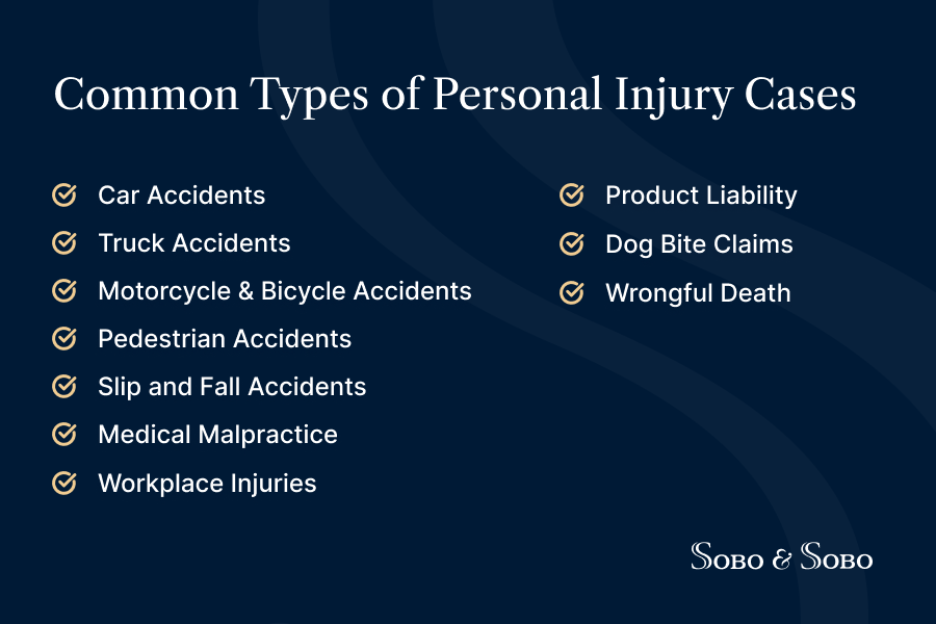
Caption: Common personal injury cases include vehicle accidents, premises liability claims, medical malpractice and workplace injuries
Most Common Types of Personal Injury Cases
Personal injury law covers many accidents, injuries, and responsible parties. Some claims are more common because they involve everyday risks: driving, walking, working, visiting businesses, receiving medical care, or using consumer products.
Car Accident Injury Claims
Car accidents are among the most common personal injury cases. Centers for Disease Control data shows that for 2019-20, motor vehicle crash injuries resulted in an average of 3.8 million emergency room visits annually in the United States.
Claims may arise when a driver causes an accident through:
- Distracted driving
- Speeding
- Drunk driving
- Reckless driving
- Failure to obey traffic laws
Injuries can range from minor soft tissue damage to traumatic brain injuries and spinal cord injuries.
Compensation for these types of personal injury cases may account for medical expenses, lost income, property damage, pain and suffering, and future care needs, depending on the facts of the claim.
Learn more about motor vehicle accidents.
Truck Accident Lawsuits
Commercial truck accidents can lead to claims that are more complex than standard car crashes. That’s because more than one person or company may have contributed to the collision. Responsible parties may include:
- Truck drivers
- Trucking companies
- Maintenance providers
- Cargo loading companies
- Vehicle or parts manufacturers
These claims may require review of driver logs, maintenance records, inspection reports, hiring practices, cargo records, and insurance coverage.
Motorcycle and Bicycle Accident Cases
Motorcyclists and bicyclists have less protection than occupants of passenger vehicles. These claims may also involve unfair assumptions about riders, visibility, speed, or who had the right of way.
As a result, accidents frequently lead to serious injuries, including:
- Broken bones
- Road rash
- Head injuries
- Neck and back injuries
Disputes often focus on whether the driver saw the rider, left enough space, yielded properly, or tried to shift blame after the crash.
Pedestrian Accident Injuries
Pedestrian accident claims often begin with a basic question: Did the driver see the person walking, and did they have enough time and space to stop?
These crashes may happen in crosswalks, parking lots, intersections, school zones, or along roads without safe pedestrian space.
Common causes include:
- Distracted driving
- Failure to yield
- Speeding
- Impaired driving
Because pedestrians have no physical protection, even a low-speed impact can cause serious injuries.
Learn more about pedestrian injuries.
Slip and Fall Accidents
Slip and fall accidents are a common type of premises liability claim.
Property owners generally have a responsibility to maintain reasonably safe conditions for visitors. The key question is often whether the owner knew, or should have known, about the hazard.
Hazards that may contribute to a slip and fall include:
- Wet floors
- Uneven walkways
- Poor lighting
- Broken stairs
- Unaddressed maintenance issues
Whether a property owner can be held responsible depends on the specific facts of the case and whether reasonable steps were taken to address the danger.
Learn more about premises liability claims.
Medical Malpractice Claims
A bad medical outcome is not always malpractice. The question is whether a healthcare provider failed to meet the accepted standard of care and caused harm as a result.
When they fail to do so and a patient suffers harm, a medical malpractice claim may arise from factors like:
- Surgical errors
- Misdiagnosis
- Delayed diagnosis
- Medication mistakes
- Birth injuries
These claims often require expert review to determine what should have happened, what went wrong, and whether the provider’s actions fell below accepted medical standards.
Learn more about medical malpractice cases.
Workplace and Construction Accidents
Workplace injuries occur across many industries but are particularly common in construction, manufacturing, and transportation.
Common examples include:
- Falls from heights
- Equipment accidents
- Electrocution injuries
- Falling object accidents
Some injured workers may qualify for workers’ compensation benefits. Others may also have a third-party claim if someone outside the employer, such as a contractor, driver, property owner, or equipment manufacturer, contributed to the accident.
Learn more about workplace injury benefits.
Product Liability and Defective Products
Product liability claims focus on whether a product was unsafe because of how it was designed, made, labeled, or maintained.
A product liability claim may arise when an injury is caused by:
- Design defects
- Manufacturing defects
- Inadequate warnings
- Faulty safety features
These cases often require preserving the product itself, packaging, manuals, warnings, purchase records, and repair history.
Dog Bite Injury Claims
Dog owners may be responsible when an animal attacks or injures another person. According to Insurance Information Institute figures, U.S. insurers recorded 28,450 dog-bite and related injury claims in 2025.
Dog bite claims may involve physical injuries, infection risks, scarring, and emotional trauma, especially when the victim is a child.
Injuries may involve:
- Puncture wounds
- Infections
- Scarring
- Nerve damage
- Emotional trauma
Because dog bite laws vary by state, it is important to understand which rules apply where the attack occurred.
Wrongful Death Lawsuits
When negligence results in a fatal injury, surviving family members may have the right to pursue a wrongful death claim.
These cases may arise from:
- Motor vehicle accidents
- Medical malpractice
- Workplace accidents
- Dangerous property conditions
A wrongful death claim may address funeral expenses, lost financial support, loss of companionship, and other damages allowed by state law.
Examples of Personal Injury Claims
Personal injury claim examples can help show why the same type of accident may lead to very different outcomes. The value and complexity of a claim often depend on the injury, available insurance, evidence of fault, medical treatment, and long-term impact.
Minor Injury Settlement Examples
A person injured in a rear-end collision may recover compensation for:
- Emergency treatment
- Follow-up medical care
- Lost wages during recovery
- Property damage
Settlement values in these types of personal injury cases often depend on the severity of the injury and the evidence available.
Catastrophic Injury Claims
Serious injuries such as spinal cord damage, traumatic brain injuries, or severe burns often involve significantly higher losses.
These claims cover compensation for:
- Long-term medical treatment
- Future care needs
- Reduced earning capacity
- Permanent disability
Insurance Settlement Examples
Insurance settlements vary based on:
- Liability
- Medical expenses
- Available insurance coverage
- Long-term impact of the injury
A minor injury claim may focus on short-term treatment and missed work, while a catastrophic injury claim may involve future care, permanent limitations, and reduced earning capacity.
What Damages Can Be Recovered in Personal Injury Lawsuits?
Compensation in a personal injury lawsuit is meant to address the losses caused by the injury. Those losses may be financial, physical, emotional, or long-term.
Medical Expenses
Medical damages reimburse a variety of medical expenses:
- Emergency care
- Hospitalization
- Surgery
- Rehabilitation
- Medication
- Future treatment needs
Lost Wages and Future Income
If injuries prevent someone from working, damages can cover:
- Lost income
- Reduced earning capacity
- Future wage losses
Pain and Suffering Damages
Pain and suffering damages may compensate for:
- Physical pain
- Loss of enjoyment of life
- Long-term limitations
- Disrupted routines
- Reduced independence
Emotional Distress Compensation
Serious accidents can also affect a person’s emotional health, especially when injuries change mobility, independence, sleep, work, or family life.
Injured individuals may seek compensation for:
- Anxiety
- Depression
- Psychological treatment
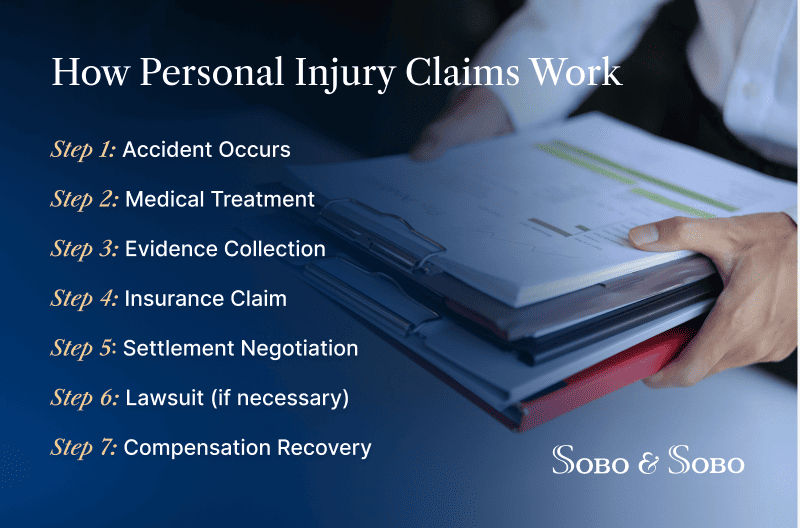
Caption: Most personal injury claims involve evidence gathering, insurance negotiations, and compensation for financial and personal losses
What Cases Do Personal Injury Lawyers Take?
Personal injury lawyers usually evaluate cases by looking at the injury, the evidence, the responsible party, available insurance, and whether legal action is likely to improve the outcome.
Cases Involving Negligence
Negligence is the foundation of most personal injury claims.
Examples:
- Distracted driving
- Unsafe property conditions
- Medical errors
Cases Involving Serious Injuries
Lawyers often assist clients facing:
- Significant medical expenses
- Long recovery periods
- Permanent disabilities
- Reduced earning capacity
Cases Involving Insurance Disputes
Insurance companies may dispute liability, damages, or coverage.
A lawyer can respond when an insurer denies fault, questions medical treatment, delays payment, or offers less than the claim may be worth.
CTA: What is a personal injury lawyer? https://sobolaw.com/personal-injury/what-is-a-personal-injury-lawyer/
How Do You Know If You Have a Personal Injury Case?
Not everyone who suffers an injury automatically has a legal claim. The key issue is usually whether someone else’s careless or wrongful conduct caused the harm.
Signs Negligence May Have Occurred
Negligence may be involved when:
- Another party acted carelessly
- Safety rules were ignored
- Dangerous conditions were not fixed
- A preventable mistake caused harm
Evidence Commonly Used in Claims
Evidence often includes:
- Medical records
- Photographs
- Witness statements
- Surveillance footage
- Accident reports
Strong evidence can help show what happened, who was responsible, and how the injury affected the person’s life.
What to Bring When Discussing a Personal Injury Claim?
If you speak with a lawyer, bring any records that help explain what happened and how the injury has affected you. Useful materials may include accident reports, medical records, photos, videos, insurance letters, witness names, repair bills, and messages from insurers or other parties.
You do not need to have everything before asking for help. A lawyer can explain what information may still be needed and what evidence should be preserved.
How Long Do You Have to File a Personal Injury Claim?
Deadlines vary depending on state law and the circumstances of the accident. Claims involving government agencies, minors, or certain medical issues may involve different rules.
Statute of Limitations
A statute of limitations sets the deadline for filing a lawsuit.
Missing that deadline may prevent you from recovering compensation.
Why Acting Quickly Matters
Acting promptly can help preserve evidence, locate witnesses, document injuries, and avoid preventable claim problems.
If you are unsure whether you have a claim, it may be helpful to speak with a lawyer as soon as possible.
How Legal Help Can Strengthen a Personal Injury Claim
A personal injury lawyer can help organize the evidence, manage insurance communications, and identify damages that may otherwise be overlooked.
Investigating the Accident
A lawyer may:
- Gather evidence
- Interview witnesses
- Review records
- Consult experts
Negotiating With Insurance Companies
Insurance companies may challenge fault, medical treatment, future care needs, lost income, or the seriousness of the injury.
An attorney can handle those communications and help evaluate whether a settlement offer reflects the full impact of the injury.
Accounting for the Full Impact of the Injury
A lawyer can help account for:
- Current medical expenses
- Future treatment needs
- Lost earnings
- Long-term impacts
Contact Sobo & Sobo for a free, no-obligation consultation.
Frequently Asked Questions About Types of Personal Injury Cases
What are the most common types of personal injury cases?
Common types of personal injury cases include car accidents, slip and fall accidents, medical malpractice claims, workplace injuries, pedestrian accidents, dog bite claims, and product liability cases.
What qualifies as a personal injury claim?
A personal injury claim generally requires an injury caused by another party’s negligence or wrongful conduct.
What types of damages can you recover?
Compensation is commonly calculated based on factors like medical expenses, lost wages, pain and suffering, emotional distress, and other damages depending on the circumstances.
What is considered negligence in a personal injury case?
Negligence occurs when someone fails to exercise reasonable care and causes harm to another person.
How do personal injury lawsuits work?
Most types of personal injury cases begin with an investigation and insurance claim process. Some cases settle through negotiation, while others proceed to litigation.
Can I sue for emotional distress?
In some types of personal injury cases, emotional distress damages may be recoverable as part of a personal injury claim.
What evidence is needed in a personal injury case?
Medical records, photographs, witness statements, accident reports, and expert testimony are commonly used to support claims in many types of personal injury cases.
When should I contact a personal injury lawyer?
It is often helpful to speak with a lawyer as soon as possible after an accident to preserve evidence and understand your legal options.
Speak With a Personal Injury Lawyer About Your Case
If you were injured because of someone else’s negligence, understanding your options is an important first step.
A free consultation can help you understand whether you may have a valid claim, what compensation may be available, and what steps could protect your case from early mistakes.
Call (855) 468-7626 or contact us online to schedule your free consultation today.