A car accident can leave you shaken and unsure what to do next.
In those first moments, it’s easy to overlook important steps that affect your health, your recovery, and your ability to pursue compensation. Knowing what to do after a car accident helps you stay focused, protect your rights, and avoid costly mistakes.
This guide walks you through each step: from the scene of the crash to handling insurance, injuries, and next steps.
Contact Sobo & Sobo for a Free Case Evaluation
What to Do After a Car Accident: Immediate Actions
The first few minutes after an accident are critical.
Check for Injuries and Call for Help
The very first item on your to-do list of what to do after a car accident: Check yourself, your passengers, and others involved for injuries. Even if you feel fine, symptoms like concussions or internal injuries may not appear right away.
If anyone is hurt, call 911 immediately. Prompt medical care protects your health and creates a record of the incident.
Move to a Safe Location
If your vehicle is drivable, move it out of traffic. Turn on hazard lights and wait in a safe area.
This helps reduce the risk of additional accidents, especially on busy roads.
Protect Your Rights and Prove Liability
Once everyone is safe, begin documenting what happened.
Be sure to specify the type of accident:
Call the Police
Request a police report and record the officer’s name and report number.
When the report is available, review it carefully and correct any errors as soon as possible.
Take Photos and Videos
Capture:
- Vehicle positions and damage
- Road conditions and traffic signs
- License plates
- Visible injuries
If possible, record a short video of the scene. Keep all files unedited.
Gather Witness Information
Collect names and contact details from anyone who saw the accident.
Witness statements can support your version of events if fault is disputed.
Exchange Information
Get the other driver’s:
- Name and contact details
- Insurance information
- Vehicle details
Avoid discussing fault at the scene.
Seek Medical Care
Get evaluated within 24 hours, even if symptoms seem minor. Even if it’s a single-car accident.
Medical records connect your injuries to the accident and help support your claim. Early treatment also reduces the risk of complications later.
Not all injuries involve broken bones. Even if symptoms seem minor at first, conditions like whiplash, soft tissue injuries, or internal trauma may take hours or days to appear.
Getting evaluated early not only protects your health but also creates a clear timeline linking your injuries to the accident. This can make a significant difference if your claim is later questioned.
Keep Detailed Records
Track everything related to the accident:
- Symptoms and recovery
- Medical visits and expenses
- Missed work
- Communications with insurance companies
Organized documentation strengthens your claim and helps avoid disputes. It’s an absolutely essential item on your list of what to do after a car accident.
Keeping organized records also makes it easier to respond to insurance requests and avoid delays.
The more clearly your documentation shows how the accident affected your health and finances, the stronger your position will be during negotiations.
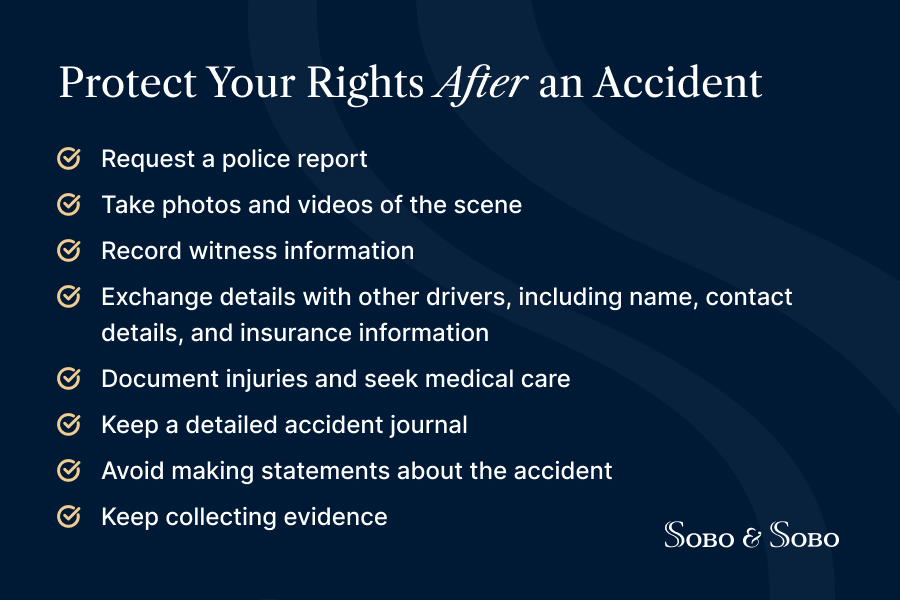
Caption: What to do after a car accident, step by step
Avoid Common Mistakes
- Do not admit fault
- Do not give recorded statements without guidance
- Do not post about the accident on social media
- Do not accept early settlement offers
Continue Gathering Evidence
Follow up after the accident:
- Request surveillance footage if available
- Save dashcam or vehicle data
- Keep all documents organized
Acting early helps preserve evidence that might otherwise be lost.
Speak With a Car Accident Lawyer Today
What to Do After a Minor Car Accident?
Even a minor accident can lead to complications.
File a Police Report
An official report helps prevent disputes later.
Watch for Delayed Injuries
Symptoms such as neck pain, headaches, or back strain may appear days later.
If anything changes, seek medical care promptly.
Document Everything
Photos, notes, and records may become important if injuries or disputes develop.
Even low-impact crashes can lead to claims if injuries are later identified.
What to Do After a Car Accident? Avoid Mistakes
Knowing what not to do is just as important.
Do Not Admit Fault
Even a simple apology can be used against you later.
Do Not Delay Medical Care
Gaps in treatment can weaken your claim and create doubt about your injuries.
Do Not Accept Quick Settlements
Early offers are often lower than what your case may be worth.
Taking time to understand your injuries and damages helps ensure fair compensation.
What to Do After a Car Accident If It Wasn’t Your Fault
If another driver caused the accident, you may be entitled to compensation.
Protect Yourself With Documentation
Keep detailed records and avoid speaking with insurance companies without guidance.
In some cases, you may still need to notify your own insurance company to preserve coverage.
Gather Proof of Liability
Evidence such as photos, witness statements, and reports helps establish fault.
In more complex cases, expert analysis may be needed to clarify how the accident occurred.
In some situations, liability may not be immediately clear. Additional evidence such as accident reconstruction, vehicle data, or expert analysis may be needed to fully explain how the crash occurred.
Strong liability evidence can prevent disputes and reduce the chances of a delayed or denied claim.
Consider Legal Guidance
Even when fault seems clear, legal guidance can help protect your rights, manage deadlines, and evaluate your claim accurately.
Managing Your Injuries after a Car Accident
Injuries can affect your health, finances, and daily life. Attending to them is a key step in what to do after a car accident.
Get Immediate Care
Seek medical attention as soon as possible, even for mild symptoms.
Follow Treatment Plans
Attend follow-up appointments and follow medical advice.
Consistent care supports both recovery and documentation.
Understand the Impact
Injuries may lead to:
- Lost income
- Ongoing treatment
- Reduced quality of life
Clear medical documentation helps ensure these effects are considered in your claim.

Caption: Even minor accidents can lead to whiplash, back strain, and soft tissue injuries that don’t appear until days later
Dealing With Your Vehicle after a Auto Accident
Don’t forget – your list of what to do after a car accident includes care for your car. Your vehicle needs attention after a crash.
Towing and Storage
If your car isn’t drivable, arrange towing through your insurer or a trusted provider.
Be aware of storage fees, which can increase quickly.
Repair Estimates
Get multiple estimates and coordinate with your insurance company.
Accurate assessments help ensure repairs are properly covered.
When Your Car Is Totaled
If repair costs exceed the vehicle’s value, it may be declared a total loss.
You may be entitled to compensation based on market value. If the offer seems low, it can be reviewed or negotiated.
Keep records of all vehicle-related costs, including towing, storage, rental vehicles, and repairs.
These expenses may be recoverable as part of your claim, especially if the accident leaves you without reliable transportation.
Consider Hiring an Attorney
Handling a claim on your own can become overwhelming.
Insurance companies may:
- Delay responses
- Question your injuries
- Offer settlements that do not reflect the full value of your claim
A lawyer can help manage communication, gather evidence, and evaluate damages.
At Sobo & Sobo, we:
- Handle insurance negotiations
- Document your claim thoroughly
- Pursue fair compensation based on your situation
We work on a contingency basis. You pay nothing unless compensation is recovered.
Call for a Free Case Evaluation
If you’re unsure what to do next, a consultation can help you understand your options.
You’ll receive:
- Clear guidance
- An evaluation of your case
- No upfront cost or obligation
Acting early makes it easier to build a strong claim.
What to Do After a Car Accident: Frequently Asked Questions
Do I need a lawyer for a minor accident?
Not always, but legal guidance can help if injuries or disputes arise. It’s an important step in what to do after a car accident, but it’s not the first step.
What’s the deadline for filing a claim?
Deadlines vary by state, so it’s important to act promptly.
How do I know what to do after a car accident if the other driver has no insurance?
Your uninsured motorist coverage may apply.
What is my case worth?
It depends on your injuries, expenses, and other factors.
What’s the best list of what to do after a car accident?
- Check for injuries and call for help
- Move to a safe location
- Call the police and request a police report
- Take photos and videos
- Record witness information
- Exchange details with other drivers, including name, contact details, and insurance information
- Seek medical care within 24 hours, even if symptoms seem minor
- Document injuries
- Keep detailed records
- Avoid making statements about the accident
- Keep collecting evidence
Schedule Your Free Case Evaluation